
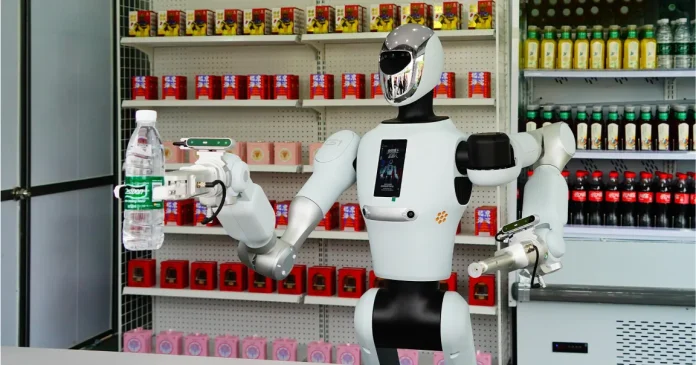
China’s Ministry of Industry and Information Technology (MIIT) has unveiled a draft action plan to significantly raise the quality standards for light industry products, with a particular focus on emerging categories such as intelligent service robots. As reported by the People’s Daily and Global Times, the draft is currently open for public consultation. It signals a concerted government effort to drive the sector toward high-end, intelligent, and green development, and to position China as a global standard-setter in the rapidly growing robotics industry.
The proposed standards are designed to play a supporting and guiding role in expanding product variety, improving overall quality, and building globally competitive brands. As China’s population ages and the demand for automated assistance grows, the regulation and standardization of service robots have become a national priority, with implications that extend far beyond domestic policy.
Focusing on Special-Needs Groups
A key component of the draft action plan is the formulation of new standards specifically for service robots designed for special-needs groups, including the elderly and individuals with disabilities. This aligns with broader government initiatives to leverage technology to address China’s demographic challenges, particularly the rapid aging of its population.
China’s demographic situation is pressing. The country has over 300 million people aged 60 and above, a number that is projected to exceed 400 million by 2035. The traditional model of family-based eldercare is under strain as birth rates decline and younger generations move to cities for work. Service robots are capable of providing companionship, monitoring health metrics, assisting with mobility, and performing household tasks, and are seen as a crucial part of the solution.
In June 2025, the MIIT, in collaboration with the Ministry of Civil Affairs, launched pilot programs for the scenario-based application of intelligent eldercare service robots. The trial period, running from 2025 to 2027, covers households, communities, and eldercare institutions across several provinces. The new quality standards will be informed by the data and feedback gathered from these ongoing pilot programs, ensuring that they reflect real-world performance requirements rather than purely theoretical benchmarks.
Shaping Global Standards
The MIIT’s draft also calls for prioritizing the development of international standards in frontier fields such as smart home systems and intelligent service robots. By establishing robust domestic standards and pushing for their adoption internationally, China aims to shape new trends in the global expansion of these sectors.
This ambition is supported by the rapid growth of the domestic robotics industry. According to official data, the number of domestic whole-machine manufacturers exceeded 140 in 2025, with more than 330 humanoid robot models launched. As these companies look to export their products—as evidenced by the recent deployment of Chinese robots in Japanese airports—having a strong foundation of national standards will be crucial for gaining international acceptance and regulatory approval.
China’s strategy of establishing domestic standards and then promoting them internationally is well-established in other technology sectors, including 5G telecommunications. The same playbook is now being applied to robotics, with the goal of ensuring that Chinese products and technologies become the global default rather than having to adapt to standards set by others.
The Safety and Reliability Imperative
The timing of the MIIT’s draft action plan is significant. It comes as the robotics industry is grappling with questions about the safety and reliability of autonomous systems, following a series of high-profile incidents involving autonomous vehicles and other AI-powered machines.
For service robots deployed in eldercare settings, the stakes are particularly high. These machines interact with vulnerable populations who may not be able to respond quickly to unexpected robot behavior. A malfunction that causes a fall or injury could have severe consequences, both for the individual involved and for public trust in the technology.
The new standards are expected to include specific requirements for safety testing, fail-safe mechanisms, and human oversight protocols. They will also likely address the cybersecurity of connected robots, which can be vulnerable to hacking if not properly secured.
Ethical and Governance Frameworks
Alongside efforts to strengthen product quality, the MIIT has stated that it will also advance research and governance frameworks related to the ethical implications of humanoid robotics. As robots become more integrated into daily life and take on roles involving emotional companionship and physical care, establishing clear ethical guidelines is essential.
Questions about the appropriate role of robots in human relationships, the potential for dependency, and the rights and responsibilities associated with increasingly autonomous machines are becoming urgent. China’s approach to these questions will be closely watched by the international community, as it will shape the norms governing a technology poised to have a profound impact on society.
(Related: Opinion: China’s Humanoid Robotics Boom Is Government-Driven, Not Startup Success)
Looking Ahead
The MIIT’s draft action plan represents a proactive approach by the Chinese government to manage the rapid proliferation of service robots. By setting high standards for quality, safety, and ethics, the ministry aims to foster a sustainable and globally competitive robotics industry that can effectively address the needs of its aging population while also establishing China as the world’s leading authority on service robot standards.
The consultation period for the draft plan will provide an opportunity for industry stakeholders, academic researchers, and civil society organizations to contribute to the development of these standards. The final version of the plan, expected later this year, will be a crucial document for anyone seeking to understand the future direction of China’s robotics industry.