
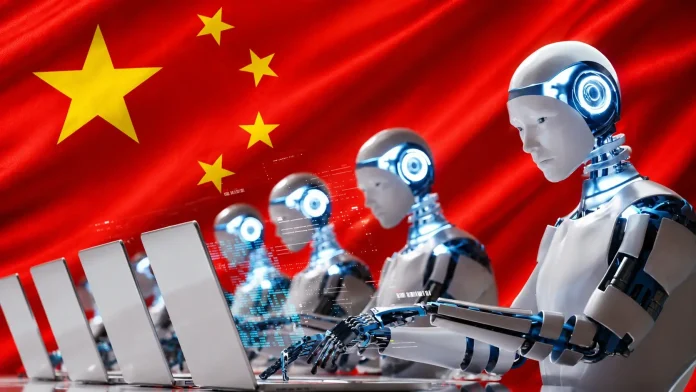
In a significant legal development that could reshape the discourse on AI and employment rights worldwide, a Hangzhou court in China ruled last week that it is illegal for a company to demote and then dismiss a senior tech worker solely to replace them with AI technology (see EastFrontier’s in-depth report on this). This marks the second such ruling since December 2025 and signals a more cautious, regulatory approach by Chinese authorities toward AI-driven labor displacement. The case offers a compelling counterpoint to the more laissez-faire attitude toward AI layoffs seen in many Western jurisdictions, particularly the United States. As covered by Politico’s Aaron Mak, this ruling not only reflects China’s unique political and economic context but also provides a potential preview of how labor markets might adapt to AI challenges globally.
The Hangzhou Ruling: Protecting Tech Workers from AI Displacement
The Hangzhou court’s decision centered on a senior technology worker who was demoted and subsequently dismissed, with the employer citing AI automation as justification for the personnel changes. The court found this move illegal, emphasizing the need to protect skilled labor from arbitrary displacement by AI systems. This ruling is emblematic of a broader Chinese policy stance that seeks to balance the rapid adoption of AI technologies with the imperative of social stability and employment security.
The case is notable for its timing and context. China faces considerable economic headwinds, including high youth unemployment, slowing consumer demand, and a mounting debt burden. As Ruby Scanlon of the Center for a New American Security aptly noted, “Because of the economic situation that China is already in with its debt, less consumer demand and high youth unemployment, [AI labor displacement] is just especially scary to them.” In this light, the court’s decision can be seen as a strategic effort to mitigate labor unrest and preserve macroeconomic stability amid rapid technological change.
Comparing China’s Approach with the United States
The Hangzhou ruling contrasts sharply with the prevailing employment norms in the United States, where “at-will” employment is the default in nearly all states. This legal doctrine allows employers broad discretion to fire workers for any reason that is not illegal discrimination or retaliation. As a result, prohibiting layoffs based on AI replacement would require new legislation that substantially overrides existing at-will employment protections — a politically challenging prospect in today’s divided American landscape.
In the Politico article, Cornell Law Professor Gali Racabi highlights the difficulty of such legislative reforms: “Such legislation is very, very far from where we are now” and would require “extreme political will that is absent in most states and localities.” This gap underscores why China’s regulatory interventions stand out as bold and proactive versus the more reactive or laissez-faire approaches common in Western democracies.
Potential Ripple Effects on Global AI Governance and Labor Markets
The Hangzhou decision raises important questions about the future governance of AI-driven labor transitions globally. Darrell West, a senior fellow at the Brookings Institution, remarked that China’s rulings “blow the China competition argument out of the water,” challenging the narrative that strict regulation of AI in the West would necessarily cede competitive advantage to China. Instead, China is demonstrating that it is possible to regulate AI labor impacts firmly while maintaining technological competitiveness.
Peter Michael Lazes of the Penn State Healthcare Partnership suggests that such protective measures may even accelerate AI adoption by reducing worker anxiety. “If workers know AI won’t replace them, they may be more willing to use AI, and employers have an incentive to train rather than lay off,” Lazes explained. This dynamic could lead to a more sustainable integration of AI that benefits both workers and shareholders.
The broader lesson may be that effective AI labor policies require balancing innovation incentives with social protections, a challenge that all leading economies are grappling with. For instance, as China continues to pursue ambitious AI initiatives, such as the “AI Plus” smart economy plan targeting a 12.6 trillion yuan market by 2030, labor market stability remains a crucial pillar of that vision.
Context: AI’s Role in China’s Labor Market and Economy
China’s approach to AI and jobs reflects a recognition that technology is reshaping labor demand rather than simply eliminating it. Recent data from China’s Two Sessions and industry analyses indicate that AI is accelerating the software sector and driving demand for new skills, rather than causing massive net job losses. This nuanced understanding aligns with the government’s efforts to regulate AI labor impacts carefully.
Moreover, China’s robust AI hardware and robotics industries, such as AgiBot’s humanoid robots capturing nearly 40% of the global market, demonstrate that AI is also creating new sectors and employment opportunities. These developments underpin the government’s cautious but progressive stance on integrating AI into the economy.
Implications for Global Tech Companies and Investors
For multinational companies and investors, China’s legal environment presents both risks and opportunities. Firms operating in China’s tech sector must navigate an increasingly complex regulatory landscape that includes strict labor protections and AI-related compliance requirements. At the same time, China’s strong AI market growth and government support make it an essential arena for innovation and investment.
The Hang Seng Tech Index’s recent struggles, partly due to structural issues and exclusion of leading AI model developers like Zhipu AI and MiniMax, highlight the evolving dynamics of China’s tech stock market. Meanwhile, positive earnings forecasts and AI-driven export growth signal robust underlying demand for AI technologies, despite geopolitical and market headwinds.
Looking Ahead: Will Other Countries Follow China’s Lead?
China’s AI labor rulings offer a potential blueprint for other countries wrestling with AI’s disruptive effects on employment. While Western economies currently lack the political consensus to impose similar restrictions on AI-driven layoffs, growing public concern about job displacement and the social costs of automation may push governments toward more interventionist policies.
Countries in Southeast Asia, for example, face their own AI governance challenges amid investment inflows from Chinese AI firms and the risk of regulatory arbitrage. As AI becomes more integrated into global supply chains and labor markets, coordinated international frameworks might emerge to balance innovation with worker protections.
Conclusion
The Hangzhou court’s ruling against AI-driven dismissal of senior tech workers represents a pivotal moment in the global conversation about AI and labor. It underscores China’s distinctive approach to harmonizing technological ambition with social stability and offers lessons that could influence AI labor governance worldwide. As AI continues to transform economies and workplaces, balancing innovation with fair labor practices will be critical to achieving sustainable growth and social cohesion.
For further insights into China’s evolving AI landscape and its intersection with labor and investment, see EastFrontier’s coverage on China’s AI Plus Plan, the Hang Seng Tech Index’s challenges, and AgiBot’s robotics breakthroughs.
External coverage of the ruling can be found at Politico and Fortune. This evolving story exemplifies how AI is not only a technological challenge but also a profound social and legal one, shaping the future of work globally.