
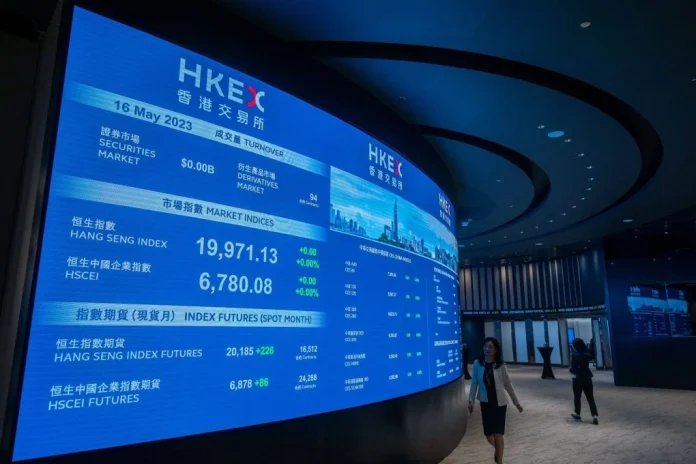
The Hang Seng Tech Index, Hong Kong’s flagship gauge of technology stocks, has failed to capitalize on the surging momentum of China’s artificial intelligence (AI) market. In an in-depth report, the South China Morning Post notes that since its launch in July 2020, the index has declined by more than 30% and is down nearly 56% from its 2021 peak as of the end of April 2026. Even this year, the index has fallen by over 11%. This underperformance is puzzling given the booming AI sector in China and the robust growth in related tech industries. Experts and investors alike are questioning why the index remains disconnected from one of the world’s fastest-growing technology themes.
Structural Limitations and Composition Gaps
One of the primary reasons the Hang Seng Tech Index has lagged behind the broader AI stock boom is structural, namely, the composition of the index itself. The index includes the 30 largest Hong Kong-listed technology companies, spanning sectors such as industrials, consumer discretionary, healthcare, financials, and information technology. The top 10 constituents by weighting consist of heavyweights including BYD, Meituan, Xiaomi, Tencent, NetEase, Alibaba, SMIC, JD.com, Kuaishou, and Baidu.
However, the index notably excludes some of the fastest-growing pure AI firms, such as MiniMax and Zhipu AI, both of which have seen extraordinary gains since their initial public offerings (IPOs). Zhipu AI’s stock price has soared by approximately 700% since listing, while MiniMax has climbed around 380%. Despite their stellar performance, both companies have been barred from inclusion due to eligibility rules that prevent smaller or newer firms from entering the index. This omission has deprived the Hang Seng Tech Index of exposure to the most dynamic segments of the AI sector and contributed heavily to its underperformance.
Kenny Ng Lai-yin of Everbright Securities International points to these structural issues as the reason behind the lagging performance. “Hong Kong’s tech stocks are lagging mainly due to structural issues,” Ng said, emphasizing that the index’s framework is not well-suited to capturing emerging AI leaders. Jason Chan, senior investment strategist at Bank of East Asia, echoed this view, noting that consensus earnings forecasts for the index’s constituents have been slashed by roughly 20% this year, and full-year earnings per share (EPS) are expected to decline.
Missing Key Exposure to AI and Semiconductor Leaders
A significant gap in the Hang Seng Tech Index is its limited exposure to upstream semiconductor companies and pure AI model developers, two pillars critical to the AI revolution. Semiconductors are the backbone of AI hardware, powering the massive computational needs of AI models. Yet, many leading semiconductor players, especially those driving AI chip innovation, are either underrepresented or absent from the index.
This contrasts sharply with the broader Asian technology markets, where South Korean and Taiwanese semiconductor firms such as Samsung Electronics, SK Hynix, and TSMC have seen surging valuations amid AI chip demand. For example, SK Hynix hit a record high with gains of nearly 13%, and TSMC’s shares jumped 6.6% to an all-time high recently, fueling broader tech rallies in these markets.
Morgan Stanley’s April 27 research report, authored by Gary Yu, forecasts that the upcoming June review of the Hang Seng Tech Index will include both Zhipu AI and MiniMax, assigning them a combined weighting of 5-7%. This inclusion could significantly narrow the index’s year-to-date losses, from a decline of 12.6% to just 7.6%. Analysts expect passive inflows of between $1.25 billion and $1.75 billion into funds tracking the index following the additions, which currently manage around $25 billion in assets.
Investor Sentiment and Market Dynamics
The exclusion of high-growth AI names has frustrated investors who see the index as not fully reflecting Hong Kong’s burgeoning AI ecosystem. A post on the Securities and Futures Commission’s website pleading to “Please save Hang Seng Tech” drew nearly 6,000 likes, underscoring growing investor impatience.
Despite the index’s struggles, Hong Kong’s broader tech fundraising remains robust. Year-to-date, Hong Kong has raised approximately HK$139 billion (around $17.74 billion), which is about half of 2025’s total. Notably, information technology deals represent 39% of this fundraising, signaling continued investor appetite for tech and AI ventures.
However, the Hang Seng Tech Index’s underexposure to the pure-play AI firms and semiconductor suppliers means it is missing a key driver of growth. This is particularly critical as China’s AI industry is accelerating rapidly, supported by strong domestic demand and government policies.
Context: China’s AI Industry Booms Despite Market Gaps
The Hang Seng Tech Index’s struggles come as China’s AI industry is experiencing significant growth across multiple fronts. For instance, Hong Kong recorded a 5.9% year-on-year GDP growth in Q1 2026, the strongest quarterly expansion in nearly five years, driven in part by strong global demand for AI-related electronics. This economic momentum aligns with surging demand for AI chips and technologies across China and the broader Asia-Pacific region.
Moreover, domestic AI startups like SenseTime have gained prominence by offering cost-competitive multimodal AI models, which challenge international leaders. SenseTime’s latest model, SenseNova U1, reportedly costs ten times less than OpenAI’s cutting-edge GPT Image 2 model, highlighting how Chinese firms are striving for competitive advantages not only in technology but in cost efficiency and service quality.
In robotics, companies like AgiBot have captured a significant share of the global humanoid robot market, demonstrating China’s increasing strength in AI applications beyond software and chips. AgiBot’s ability to slash unit costs dramatically while increasing production scale illustrates how China is deploying AI to transform manufacturing and industrial processes.
Regulatory and Strategic Implications
The Hang Seng Tech Index’s composition issues also reflect broader regulatory and strategic trends in China’s AI ecosystem. For example, the Chinese government’s cautious approach to cross-border transactions, such as the recent reversal of Meta’s $2 billion Manus acquisition on national security grounds, highlights Beijing’s sensitivity toward foreign control of AI technology assets. This has prompted some Chinese AI firms to relocate headquarters offshore to Singapore or Dublin, complicating their eligibility for inclusion in Hong Kong-based indices.
In response, policymakers across Southeast Asia are developing frameworks to manage AI investment risks while supporting industry growth, underscoring the complex geopolitical environment in which China’s AI sector operates.
What the Future Holds for Hang Seng Tech Index
The anticipated inclusion of Zhipu AI and MiniMax in the Hang Seng Tech Index in the June review could mark a turning point. By incorporating these high-growth pure AI stocks, the index may better capture China’s AI boom and close the performance gap with broader Asian tech markets.
However, the index still needs to address its exposure to upstream semiconductor firms to fully reflect the AI ecosystem’s potential. This is especially important given the ongoing global chip supply challenges and China’s strategic investments in semiconductor manufacturing capacity.
Investors looking to tap into China’s AI growth story should also pay attention to the evolving regulatory landscape and the industry’s nuanced shifts. For deeper insights on China’s AI labor market dynamics and the government’s evolving stance, readers can explore our coverage on China’s AI and jobs concerns and the latest labor court rulings affecting AI displacement.
Furthermore, the rise of domestic chipmakers reshaping the local AI hardware market provides essential context on how China is working toward chip self-sufficiency, a factor critical for sustaining AI growth. Our recent analysis on China’s domestic chipmakers seizing local AI market share offers valuable perspective.
Conclusion
The Hang Seng Tech Index’s disappointing performance amid China’s AI stock boom reflects structural limitations in its composition and a lack of exposure to the fastest-growing pure AI and semiconductor firms. While the upcoming index review promises some relief with the inclusion of high-flying AI startups, significant challenges remain in aligning the index with China’s rapidly evolving tech landscape.
As China’s AI industry continues to expand, driven by innovation, cost-competitive models, and robust domestic demand, investors and index providers must adapt to capture this transformative trend. The Hang Seng Tech Index’s evolution will be a key barometer of Hong Kong’s relevance in the global AI race.
For more on the broader AI and robotics industry transformation in China, see our coverage of China’s ambitious robotics plans and how AI is reshaping labor markets.