
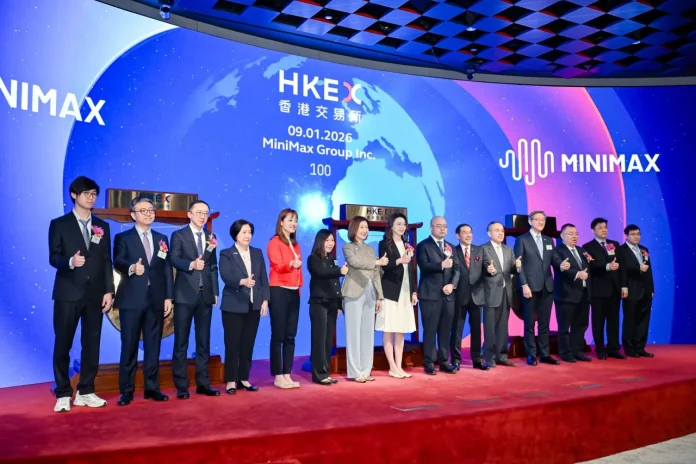
Chinese artificial intelligence startup MiniMax has reported a significant surge in revenue in its first financial results since going public, underscoring the rapid commercialization of generative AI technologies in the domestic market. The company, which debuted on the Hong Kong Stock Exchange earlier this month, announced that its revenue more than doubled, reaching $79 million for the fiscal year ending December 31, 2025, up 159 percent from $30.5 million in fiscal year 2024.
A Bloomberg report highlights that this 159 percent year-over-year revenue growth was primarily driven by strong enterprise adoption of its proprietary large language models. However, the rapid expansion has come at a significant cost, with the company’s net losses widening substantially as it continues to invest heavily in research, development, and computing infrastructure.
Revenue Growth and Enterprise Adoption
MiniMax’s impressive top-line growth reflects the increasing demand for AI solutions among Chinese enterprises. The company’s $79 million in revenue represents a major milestone for the startup, founded in 2021 and quickly emerging as one of China’s leading AI developers. The 159 percent increase from the previous year demonstrates the successful monetization of its core technologies, particularly its foundational models.
The growth was fueled by a combination of API access fees, enterprise software subscriptions, and customized AI solutions tailored for specific industry verticals. MiniMax has successfully positioned its models as viable alternatives to both Western counterparts and domestic rivals, securing contracts with major corporations across sectors such as finance, e-commerce, and entertainment. The company’s ability to deliver reliable, high-performance AI capabilities tailored to the nuances of the Chinese language and regulatory environment has been a key driver of this enterprise adoption.
The financial results also provide the first detailed look at the company’s performance since its highly anticipated initial public offering in Hong Kong. The IPO, which valued the company at over $6 billion, was seen as a bellwether for investor sentiment toward China’s AI sector. The strong revenue figures are likely to reassure investors about the commercial viability of MiniMax’s business model, even as the broader AI industry grapples with questions about long-term profitability.
(Related: China’s Token Economy Mints New AI Billionaires as MiniMax and Zhipu Surpass Baidu in Market Value)
Widening Losses and Infrastructure Costs
Despite the robust revenue growth, MiniMax’s financial results also revealed a significant widening of its net losses. The company reported a net loss of $1.87 billion for the year, a substantial increase from the $465 million loss recorded in the previous year. This widening deficit underscores the immense capital requirements for developing and deploying frontier AI models.
The primary driver of these losses is the escalating cost of computing infrastructure. Training and running large language models requires massive clusters of advanced graphics processing units (GPUs), which are both expensive to acquire and costly to operate. As MiniMax scales its operations and develops more sophisticated models, its infrastructure expenses have surged. The company’s research and development costs also increased significantly, reflecting its ongoing efforts to attract top AI talent and maintain its competitive edge in a rapidly evolving technological landscape.
The widening losses underscore the fundamental challenge facing AI startups globally: balancing the need for rapid growth and technological advancement with the imperative of achieving profitability. While the revenue growth demonstrates strong market demand, the substantial losses indicate that MiniMax, like many of its peers, is still in a highly capital-intensive phase of its development. The company’s ability to eventually achieve profitability will depend on its capacity to optimize its infrastructure costs, improve the efficiency of its models, and continue scaling its high-margin enterprise software business.
Strategic Implications and Market Position
MiniMax’s financial results have broader implications for China’s AI ecosystem. The company’s success in commercializing its models demonstrates that there is a robust domestic market for generative AI technologies independent of Western platforms. This aligns with Beijing’s strategic goal of fostering a self-reliant technology sector capable of competing on the global stage.
However, the widening losses also highlight the financial pressures facing Chinese AI developers. The high cost of computing infrastructure is exacerbated by US export controls, which restrict access to the most advanced Nvidia GPUs. This forces Chinese companies to rely on less efficient alternatives or invest heavily in developing domestic hardware solutions, further driving up costs. The ability of companies like MiniMax to navigate these constraints while maintaining their technological momentum will be a critical factor in determining the long-term success of China’s AI industry.
Looking ahead, MiniMax’s focus will likely remain on expanding its enterprise customer base and developing more advanced, multimodal AI capabilities. The company’s strong revenue growth provides a solid foundation for these efforts, but the widening losses serve as a reminder of the immense challenges that lie ahead. As the AI landscape continues to evolve, MiniMax’s ability to balance growth with financial sustainability will be closely watched by investors, competitors, and policymakers alike.
(Related: Hong Kong IPOs Hit 5-Year High in Q1 2026, Led by China AI Tigers Zhipu and MiniMax)