
The Rise of the AI Token Economy in China
China’s artificial intelligence sector is experiencing a structural re-rating, driven by the rapid emergence of a “token economy.” As AI development shifts toward performing a diverse array of tasks, the demand for tokens, the basic units of data processed by large language models, has surged globally. This consumption boom has created a distinct advantage for Chinese AI developers, who benefit from abundant low-cost electricity and a highly competitive domestic market.
Tokens, which typically represent about four characters of text, have become the fundamental currency of the AI economy. While many AI firms offer free or flat-fee monthly plans, these often come with low token caps. Application developers and enterprise users with higher demands pay for large language model (LLM) usage based on the volume of tokens processed, with output tokens often costing significantly more than input tokens. This shift has transformed AI inference from a speculative narrative into a highly monetizable activity.
MiniMax and Zhipu Eclipsing Legacy Tech Giants
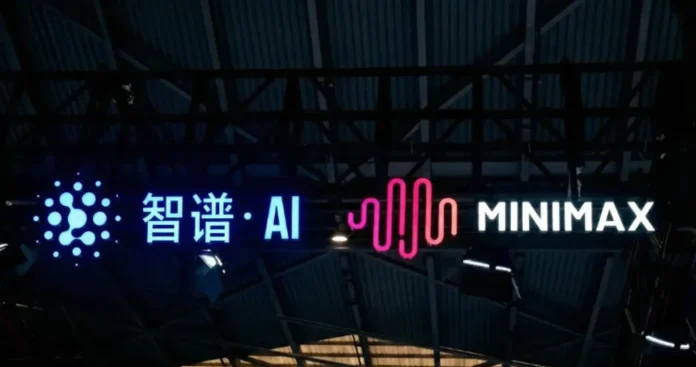
The financial impact of this token economy is reshaping China’s tech hierarchy. Bloomberg reports that niche AI startups are rapidly winning investor favor over established technology leaders, viewed as pure-play investments with greater growth potential. Recently listed developers MiniMax Group Inc. and Knowledge Atlas Technology Joint Stock Co., commonly known as Zhipu, have both touched market valuations exceeding $40 billion.
This remarkable milestone means these relatively young AI startups have surpassed the market capitalization of legacy tech titans like Baidu Inc. and Kuaishou Technology. The surge in valuation for these AI-native companies stands in stark contrast to the performance of broader tech conglomerates like Alibaba Group Holding Ltd., whose sprawling businesses remain exposed to wider macroeconomic headwinds.
Structural Re-rating and Global Export Ambitions
Investors are increasingly viewing this shift not as a short-term trading anomaly, but as a fundamental realignment of the market. Victoria Mio, a portfolio manager and head of Greater China Equities at Janus Henderson Group, noted that the rally reflects a structural re-rating. “Investors are responding to visible token consumption, early pricing power and evidence that AI inference is becoming a monetizable activity, not just a narrative,” Mio explained.
Similar to the DeepSeek boom observed last year, the current market enthusiasm is built on the premise that China’s cost efficiency in AI inference will secure its position as a long-term global winner. Beijing has actively seized upon this trend, integrating it into its broader strategy to make the domestic tech industry globally competitive. The concept of “token export” has even emerged as a prominent buzzword in Chinese state media, signaling a coordinated push to capture international market share in AI processing.
As the token economy matures, it is not only defining transactions between AI providers and their customers but also reshaping internal corporate metrics, with tech employers increasingly using token consumption to measure developer productivity. The rapid ascent of MiniMax and Zhipu underscores a pivotal moment: in the AI era, the ability to efficiently process and monetize tokens is becoming the primary driver of technological dominance.