
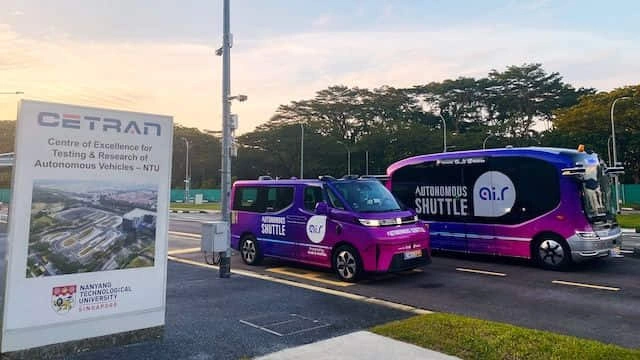
Chinese autonomous driving startup WeRide has partnered with Southeast Asian ride-hailing giant Grab to launch public robotaxi operations in Singapore, marking a significant milestone in the commercialization of autonomous mobility services in the region. This collaboration brings together WeRide’s advanced self-driving technology and Grab’s extensive operational network, creating a formidable force in the rapidly evolving urban transportation landscape. The launch in Singapore serves as a critical proving ground for the international expansion of Chinese autonomous driving technology.
The launch of the robotaxi service in Singapore follows a period of rigorous testing and regulatory approval. WeRide’s autonomous vehicles, equipped with a sophisticated array of sensors, cameras, and proprietary AI algorithms, have been navigating the complex urban environment of Singapore to ensure safety and reliability. The integration with Grab’s platform allows users to seamlessly book a robotaxi ride through the familiar Grab app, providing a convenient and accessible entry point for the public to experience autonomous transportation. This seamless integration is crucial for driving user adoption and overcoming the initial hesitation often associated with new mobility technologies.
What It Means for WeRide and Grab
This partnership is highly strategic for both companies. For WeRide, expanding into Singapore represents a crucial step in its global expansion strategy. Singapore’s well-developed infrastructure, supportive regulatory environment, and tech-savvy population make it an ideal testing ground and launchpad for autonomous mobility solutions. By partnering with Grab, WeRide gains immediate access to a massive user base and a deep understanding of local transportation dynamics, significantly accelerating its market penetration. The data gathered from operations in Singapore will be invaluable for refining WeRide’s algorithms and adapting its technology to diverse urban environments.
For Grab, the integration of robotaxis into its platform aligns with its vision of providing comprehensive and innovative mobility solutions. As the demand for ride-hailing services continues to grow, autonomous vehicles offer a potential solution to challenges such as driver shortages and operational inefficiencies. By embracing robotaxi technology, Grab aims to enhance the reliability and availability of its services while positioning itself at the forefront of the future of transportation. The partnership with WeRide allows Grab to offer cutting-edge mobility options without bearing the full cost and risk of developing autonomous driving technology in-house.
The deployment of robotaxis in Singapore is expected to have a profound impact on the city-state’s urban mobility ecosystem. Autonomous vehicles have the potential to improve traffic flow, reduce congestion, and enhance road safety by eliminating human error. Furthermore, the widespread adoption of robotaxis could lead to a shift in vehicle ownership patterns, as more people opt for shared, on-demand autonomous mobility services rather than owning personal cars. This aligns with Singapore’s broader goals of promoting sustainable and efficient urban transportation.
Gradual Rollout
However, the widespread commercialization of robotaxis still faces several challenges. Public acceptance and trust in autonomous technology remain critical hurdles. Ensuring the safety and reliability of the vehicles in all weather conditions and complex traffic scenarios is paramount. Additionally, the regulatory framework governing autonomous vehicles must continue to evolve to address issues such as liability, insurance, and data privacy. The successful operation of the WeRide-Grab service will depend heavily on their ability to navigate these complex regulatory and societal challenges.
To address these challenges, WeRide and Grab are adopting a phased and cautious approach to the rollout. The initial operations will likely be limited to specific geographic areas and operating hours, allowing the companies to gather valuable data and refine their systems based on real-world feedback. Continuous monitoring and collaboration with regulatory authorities will be essential to ensure the safe and responsible deployment of the technology. This iterative approach is designed to build public trust and demonstrate the safety and reliability of the robotaxi service over time.
The launch of the WeRide-Grab robotaxi service in Singapore also highlights the growing influence of Chinese autonomous driving companies on the global stage. Chinese startups, backed by significant investment and a highly competitive domestic market, are rapidly advancing their technological capabilities and expanding their international footprint. This trend is expected to intensify the global competition in the autonomous mobility sector, driving further innovation and accelerating the transition towards a driverless future.
The partnership between WeRide and Grab to launch public robotaxi operations in Singapore represents a major step forward in the commercialization of autonomous transportation. By combining their respective strengths, the two companies are well-positioned to shape the future of urban mobility in Southeast Asia and beyond. As the technology matures and public acceptance grows, robotaxis have the potential to revolutionize the way we move, creating safer, more efficient, and more sustainable transportation systems for cities around the world.