
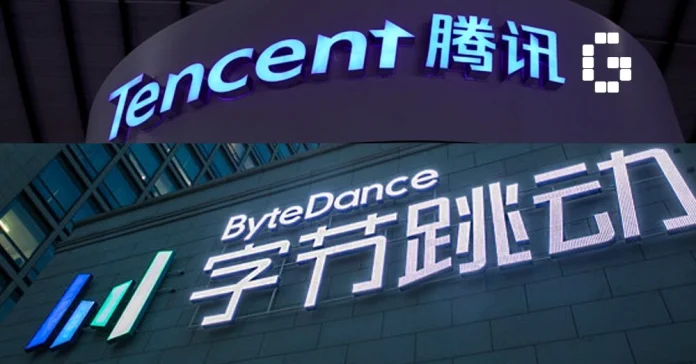
The battle for supremacy in China’s artificial intelligence sector is increasingly being fought not just with silicon and data but also through aggressive talent acquisition. In a significant escalation of this talent war, Tencent Holdings has reportedly poached multiple core engineers from ByteDance’s elite Seed AI research team.
The defections, reported in early April 2026, represent a targeted strike at the heart of ByteDance’s AI ambitions. The Seed team is widely recognized as ByteDance’s flagship research and development unit, responsible for training the foundational large language models that power the company’s suite of generative AI products, including its popular Doubao chatbot and various enterprise tools. Losing key architects from this unit is a substantial setback for the TikTok parent company, which has been investing heavily to maintain parity with domestic rivals and global leaders like OpenAI.
For Tencent, the aggressive recruitment strategy is a clear signal of its intent to accelerate its own AI initiatives. While Tencent has successfully deployed its Hunyuan model across its vast ecosystem of gaming, social media, and cloud services, the company is under immense pressure to maintain its technological edge, particularly as AI agents become deeply integrated into platforms like WeChat.
The poaching of the Seed team engineers highlights a critical reality of the current AI landscape: the extreme scarcity of elite talent. While China boasts a massive pool of software engineers and data scientists, the number of individuals with the specific expertise required to architect, train, and optimize massive foundational models is vanishingly small. These researchers possess a rare combination of deep mathematical understanding, systems engineering experience, and the intuition required to manage the unpredictable behavior of neural networks at scale.
As a result, the compensation packages and incentives required to lure these individuals have skyrocketed. Tech giants are increasingly willing to engage in direct, aggressive poaching from their closest competitors, recognizing that a single key hire can significantly accelerate a product roadmap or solve a critical technical bottleneck.
This talent war is further complicated by the geopolitical environment. With US export controls restricting access to the most advanced Nvidia GPUs, Chinese AI teams are forced to innovate in software optimization and distributed training techniques to extract maximum performance from less capable domestic hardware. The engineers who have mastered these specific, highly constrained training environments are particularly valuable.
The movement of talent from ByteDance to Tencent is unlikely to be an isolated incident. As the focus of the AI race shifts from building foundational models to deploying autonomous agents and industry-specific applications, the demand for specialized engineering talent will only intensify. For China’s tech giants, attracting and retaining the brightest minds in the field is now just as critical as securing the next shipment of advanced semiconductors.