
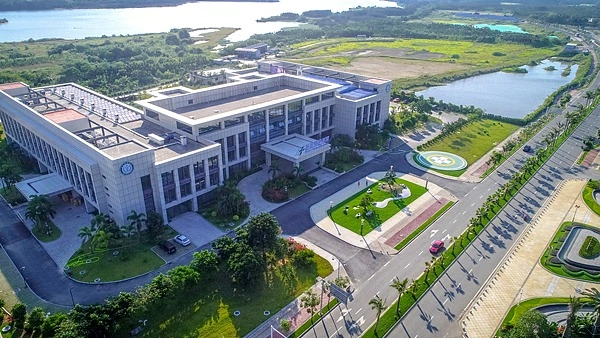
China has officially launched its first “AI hospital,” a facility that fundamentally reimagines the relationship between patients, medical resources, and artificial intelligence. The Hainan Boao Super Digital Intelligence Hospital Management Co., located in the Boao Lecheng International Medical Tourism Pilot Zone, represents a shift from using AI as a supplementary tool to embedding it as the core operating system of a healthcare institution.
The launch, detailed in reports by Xinhua and the Global Times, coincides with the release of the first internationally recognized definition of an “AI hospital” at the 2026 Zhongguancun Forum in Beijing. According to the consensus document, an AI hospital is a “new type of smart healthcare model in which AI is embedded into the system itself, linking offline medical expertise with the broader reach of online services to deliver more proactive and continuous care.”
Reversing the Search for Treatment
The most profound innovation of the Boao Super AI Hospital is its approach to patient matching. Traditionally, patients with complex or rare conditions bear the burden of navigating the medical system, searching for specialists, and seeking access to experimental or specially licensed treatments.”
Instead of patients searching everywhere for medicine, the right medicine can now ‘find’ the right patients,” explained Zhang Bangqun, general manager of the Super AI Hospital.
This reversal is powered by the hospital’s proprietary AI intelligence network and a Mobility-as-a-Service (MaaS) results promotion platform. The system relies on core modules dubbed “thousand-disease agents” and “thousand-hospital agents.” These AI agents continuously track global data on the latest drugs and medical devices, particularly those available through the special import policies of the Boao Lecheng pilot zone.
Simultaneously, the AI assesses patient data to identify individuals with relevant indications. When a match is found, the system proactively connects the patient with the appropriate treatment plan, drastically reducing the time and geographical barriers associated with accessing cutting-edge care.
Bridging the Gap Between Lab and Clinic
Beyond patient matching, the AI hospital serves as an accelerator for medical innovation. The MaaS platform is designed to connect the entire healthcare value chain, from technology research and development to clinical application.
By analyzing real-world data generated within the hospital, the AI system provides feedback to pharmaceutical companies and medical device manufacturers, accelerating the refinement and approval of new treatments. A dedicated app connects providers and users of medical AI scenarios, facilitating the transfer of high-quality technologies from the laboratory into real-world medical settings.
This integrated approach addresses a critical bottleneck in the healthcare industry: the “information gap” that often delays the adoption of new therapies. By centralizing data and automating the matching process, the Super AI Hospital aims to reduce the extra burden patients face due to cross-regional treatment-seeking and fragmented medical records.
A Blueprint for Future Healthcare
The establishment of the Boao Super AI Hospital is not an isolated experiment but a blueprint for the future of Chinese healthcare. It aligns with related initiatives, such as the recent launch of Meituan’s AI healthcare products, which focus on consumer-facing health management.
However, the Boao facility represents a deeper structural integration of AI into clinical practice. By defining the standards for an “AI hospital” at the Zhongguancun Forum, China is signaling its intent to export this model and establish a framework for how artificial intelligence can transform healthcare delivery from a reactive, patient-driven search to a proactive, system-driven approach.
As the facility scales its operations, it will serve as a critical testing ground for the efficacy, safety, and ethical implications of AI-driven medical care, potentially setting a new global standard for the hospitals of the future.