
The Fusion of Quantum Computing and Artificial Intelligence
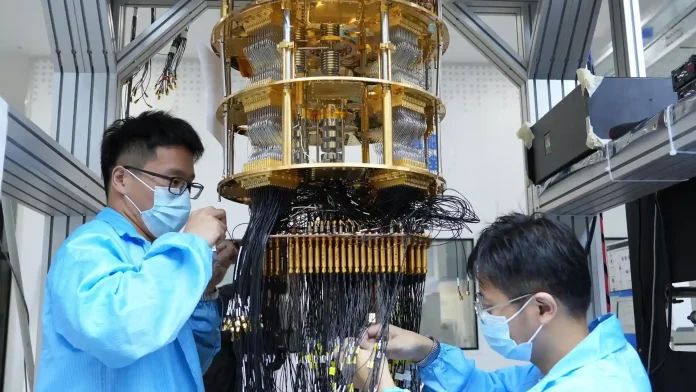
In a development that underscores China’s rapid advancement in next-generation computing paradigms, the country’s third-generation independent superconducting quantum computer, “Origin Wukong,” has been successfully equipped with artificial intelligence (AI) computing capabilities. Xinhua reports how this integration, announced by the Anhui Provincial Key Laboratory of Quantum Computing Chips, represents a critical transition for China’s homegrown quantum computing power, moving from merely “usable” to genuinely “user-friendly.” This milestone marks the first time China’s indigenous quantum computing infrastructure has been systematically integrated into the broader AI application ecosystem.
The convergence of these two transformative technologies is not merely an academic exercise; it is a strategic imperative. Guo Guoping, the director of the laboratory, emphasized the significance of this fusion, stating, “The fusion of quantum computing and AI is an important direction for the next generation of computing revolution. Their complementarity provides a new path to break through traditional computing power bottlenecks and technological limitations.” This synergy aims to leverage the unparalleled processing speed of quantum mechanics to accelerate complex AI algorithms, while simultaneously utilizing AI to optimize and manage the intricate operations of quantum systems.
Origin Brain and QPanda3: Lowering the Barrier to Entry
To facilitate this unprecedented integration, the research team behind Origin Wukong has launched a suite of specialized quantum AI tools. Chief among these is the “Origin Brain” quantum knowledge large model. This specialized AI model is designed specifically to serve the needs of quantum computing researchers, educators, and developers. By providing efficient and accurate intelligent knowledge services, Origin Brain aims to significantly lower the formidable barriers to learning and conducting research in the highly specialized field of quantum mechanics.
Complementing Origin Brain is the introduction of the QPanda3 Runtime MCP service. This tool represents a major leap forward in user accessibility. It allows users to submit complex quantum computing tasks through natural language dialogue, effectively making quantum computing power “available on demand.” This conversational interface democratizes access to Origin Wukong, enabling researchers and developers who may not possess deep expertise in quantum programming languages to harness its capabilities. This shift toward intuitive interaction is a crucial step in transitioning quantum computing from a niche scientific endeavor to a practical tool for widespread industrial application.
The 72-Qubit Powerhouse and Its Global Reach
At the heart of this technological leap is the Origin Wukong itself. Powered by the “Wukong Chip,” a 72-qubit self-developed superconducting quantum processor, the system is both programmable and deliverable. Since its official launch in January 2024, Origin Wukong has not been an isolated experiment; it has been actively providing quantum computing services on a global scale. According to reports, the system has accommodated over 47 million visits from users across 163 countries and regions worldwide.
This extensive global usage demonstrates the robustness and reliability of the Origin Wukong platform. It also highlights China’s strategy of not only developing cutting-edge technology but also establishing itself as a key provider of advanced computing infrastructure to the international community. The integration of AI capabilities is expected to further accelerate this adoption, as the system becomes better at handling complex, real-world problems that traditional supercomputers struggle to solve efficiently.
Exploring Quantum-AI Hybrid Algorithms for Industry
Looking beyond the immediate technical achievements, the research team is actively exploring the practical applications of this newly forged quantum-AI synergy. The focus is on developing quantum-AI hybrid algorithms tailored for specific, high-impact sectors. Key areas of interest include electric power grid optimization, complex financial modeling, and advanced industrial manufacturing processes. By applying the combined power of quantum computing and AI to these domains, the goal is to provide more precise, efficient, and rapid support for critical industry decision-making.
This strategic direction aligns with China’s broader economic goals of industrial upgrading and technological self-reliance. As traditional computing architectures approach their physical limits, the ability to deploy quantum-accelerated AI solutions could provide a decisive competitive advantage in optimizing supply chains, discovering new materials, and managing complex logistical networks. The successful integration of AI into Origin Wukong is not just a scientific breakthrough; it is a foundational step toward realizing the commercial and industrial potential of the quantum era.