
The Rise of the Zero-Employee Startup
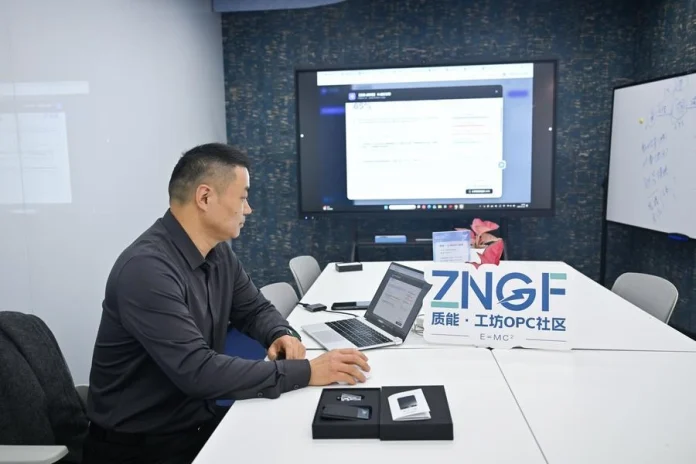
In a radical departure from the traditional venture capital model that prioritizes rapid headcount growth, China is actively subsidizing a new breed of entrepreneurship: the one-person AI startup. Across the country, municipal governments are rolling out aggressive incentive programs designed to attract solo founders who leverage autonomous AI agents to build and scale businesses without hiring a single human employee.
The programs initially took shape around developers building on the OpenClaw AI agent framework, the autonomous tool that became one of China’s most-used AI platforms in 2026, but have since broadened to cover AI-native solo founders more generally. Currently, seven major Chinese cities, including tech hubs like Shenzhen and Wuxi, have launched dedicated programs targeting these ultra-lean enterprises. The incentives are staggering. Business Insider reports that founders are being offered up to $720,000 in direct subsidies, free housing, and complimentary office space. This government-backed initiative is accelerating a trend that is already reshaping the Chinese tech landscape. The proliferation of advanced, accessible AI tools, particularly autonomous agent frameworks, has democratized software development and business operations. By automating tasks ranging from coding and customer service to marketing and data analysis, a single capable founder can now execute the workload of an entire traditional startup team. EastFrontier has previously reported on the rise of the AI-driven one-person company in China.
Redefining Entrepreneurship and Economic Efficiency
The push to fund zero-employee startups reflects a strategic pivot by Chinese policymakers. Rather than relying solely on massive tech conglomerates to drive innovation, local governments are attempting to cultivate a highly distributed, hyper-efficient ecosystem of micro-enterprises.
This approach offers several distinct advantages. First, it dramatically lowers the barrier to entry for entrepreneurship, allowing highly skilled individuals to bring products to market without the friction of fundraising for payroll or managing human resources. Second, it aligns perfectly with Beijing’s broader mandate to accelerate AI adoption and deployment across all sectors of the economy. By incentivizing founders to push the limits of what AI agents can achieve autonomously, the government is effectively stress-testing and advancing domestic AI capabilities in real-world commercial environments.
The phenomenon is already yielding remarkable results. Reports have surfaced of solo founders generating hundreds of millions in revenue with fleets of AI agents. This level of productivity per capita is unprecedented and challenges the conventional metrics used to evaluate startup success.
A New Paradigm for Global Competitiveness
The aggressive subsidization of one-person AI startups in China stands in stark contrast to the startup ecosystems in Silicon Valley and Europe, where venture capital remains heavily focused on scaling teams alongside revenue. By removing the financial risks associated with early-stage development, providing housing, workspace, and substantial capital, Chinese cities are creating a massive sandbox for AI-native business models.
This strategy also addresses broader economic and demographic challenges. As China navigates a shifting labor market and seeks to transition toward higher-value, technology-driven economic output, empowering individuals to operate as highly leveraged economic units offers a compelling solution.
The success of these zero-employee startups raises profound questions about the future of work and enterprise structure. If a single founder, armed with government subsidies and a sophisticated AI stack, can outmaneuver traditional companies burdened by high overhead and complex management hierarchies, the global standard for startup efficiency may be permanently altered. China’s bold experiment is not just about funding new businesses; it is about engineering the blueprint for the next generation of the digital economy.