
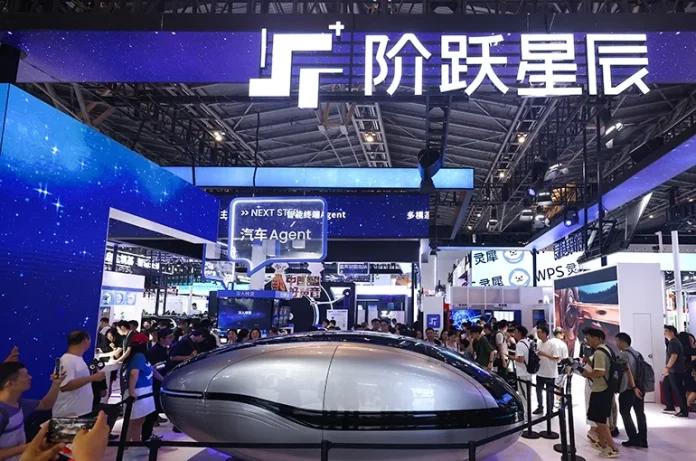
As China’s AI and tech startups recalibrate their public market strategies amid shifting regulatory landscapes, StepFun, a prominent AI startup, is poised to list in Hong Kong after unwinding its offshore Cayman Islands holding structure. According to Reuters, this move underscores a growing trend among Chinese tech firms to streamline operations in compliance with both Chinese and international regulations ahead of IPOs. Meanwhile, Moonshot AI, another high-profile AI startup, is reportedly evaluating a similar restructuring, reflecting broader industry dynamics.
StepFun’s Strategic Exit from Cayman Islands Structure
StepFun’s decision to dismantle its offshore Cayman Islands holding company marks a significant pivot in its corporate governance and fundraising approach. Traditionally, many Chinese tech startups opted for Cayman Islands entities to facilitate foreign investment and ease access to international capital markets, particularly the U.S. However, rising geopolitical tensions, evolving regulatory scrutiny in both China and abroad, and the complexities of cross-border compliance have made this structure less tenable.
By transitioning its corporate domicile and restructuring its holding company in Hong Kong, StepFun aims to position itself favorably for a Hong Kong Stock Exchange (HKEX) listing. This strategy aligns with the recent tightening of China’s regulatory environment around data security, overseas listings, and financial disclosures. Hong Kong’s regulatory framework offers a more direct link to China’s domestic market while providing international investors with a degree of transparency and legal protection.
The Regulatory Environment Catalyzing Structural Changes
The Chinese government has increasingly emphasized tighter control over data security, AI technology, and capital flows, prompting startups to rethink their offshore structures. The State Council and the China Securities Regulatory Commission (CSRC) have issued guidelines discouraging certain types of overseas listings and imposing stricter review processes for companies with sensitive data or AI applications, especially those in areas flagged for national security concerns.
Hong Kong, benefiting from its unique status as a Special Administrative Region and its proximity to mainland China, has become a favored venue for Chinese tech IPOs seeking to comply with these new regulations. The HKEX has also updated its listing rules to accommodate “red chip” companies and biotech and technology firms, making it attractive for AI startups like StepFun. Hong Kong IPOs just hit a 5-year max in the first quarter of 2026, to a significant extent a result of strong IPOs by AI tigers Zhipu and MiniMax.
Moonshot AI’s IPO Considerations Mirror Industry Trends
Moonshot AI, an emerging leader in China’s generative AI space, is reportedly contemplating a similar unwinding of its Cayman Islands structure in preparation for a potential Hong Kong IPO. This development reflects a broader shift in the AI startup ecosystem, where companies are balancing the need for foreign capital with the necessity of regulatory compliance and operational transparency.
The company’s IPO deliberations underscore the strategic recalibrations AI startups are making to secure sustainable growth and investor confidence.
Implications for Foreign Investors and Capital Markets
StepFun’s restructuring and Moonshot’s considerations signal a maturation of China’s AI startup sector as it navigates complex geopolitical and regulatory headwinds. For foreign investors, the move towards Hong Kong listings may offer greater clarity and regulatory assurance compared to traditional offshore Cayman Islands structures, which have come under increased scrutiny.
However, investors must also consider the nuanced risks inherent in China’s evolving regulatory landscape. Enhanced government oversight of AI technology, data privacy, and cross-border capital flows means that companies operating in these sectors must maintain robust compliance frameworks.
Hong Kong’s Growing Role as a Tech IPO Hub
Hong Kong’s stock exchange has emerged as a critical gateway for Chinese tech startups seeking public capital. Its proximity to mainland China, combined with international financial infrastructure and legal protections, positions it uniquely to serve as a bridge between China’s innovation ecosystem and global investors.
StepFun’s impending IPO in Hong Kong exemplifies how the city is becoming a primary venue for AI and tech companies navigating the intersection of Chinese regulations and international market demands. The trend of unwinding offshore structures in favor of Hong Kong domiciliation is expected to accelerate, further solidifying the city’s role in the semiconductor, AI, and robotics sectors.
Structural Shifts Reflect Broader Industry Evolution
The decisions by StepFun and Moonshot AI to reconsider their offshore structures are not isolated events but part of a broader evolution in China’s AI and technology industries. Companies are increasingly prioritizing compliance, governance, and local legitimacy alongside technological innovation and market expansion.
This evolution aligns with China’s national goals to lead in AI and semiconductor development while ensuring data sovereignty and security. As startups adapt to align with these priorities, investors and market watchers will need to stay attuned to regulatory signals and structural changes shaping the sector’s trajectory.
Looking Ahead: IPO Timelines and Market Reception
StepFun’s restructuring paves the way for a potential IPO in Hong Kong within the next 12 to 18 months, according to industry sources. The company’s ability to meet the HKEX’s stringent listing requirements, including transparency around data practices and AI applications, will be closely watched.
Moonshot AI’s timeline remains less certain but is expected to follow a similar trajectory if the company proceeds with its IPO plans. Both companies’ listings will serve as bellwethers for the health and direction of China’s AI startup ecosystem in public markets.