
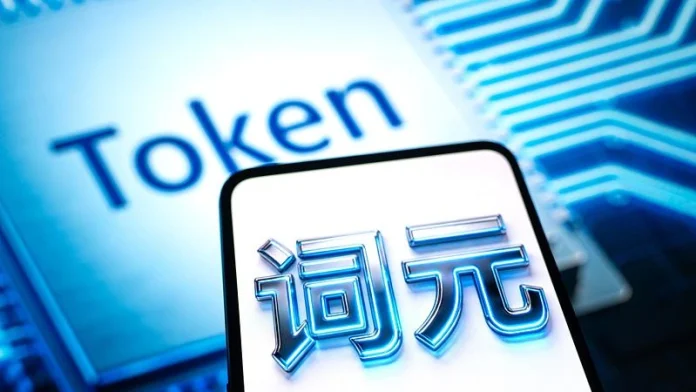
As artificial intelligence technologies become deeply embedded in everyday life and business operations across China, a new digital frontier of security risks has emerged surrounding the fundamental building blocks of AI: tokens. This week, China’s Ministry of State Security issued a rare public warning about vulnerabilities tied to AI tokens, digital units of information that power everything from text generation to identity verification. This cautionary announcement follows rapid growth in China’s AI usage, with daily token calls surpassing an unprecedented 140 trillion by March 2026. The warning highlights how token theft, forgery, and fraud now pose severe risks not just to individual users but to the country’s broader data and economic security.
Understanding AI Tokens: China’s “Ciyuan” as the Digital Currency of AI Operations
In early 2026, China’s National Data Administration officially designated the term “ciyuan” (token) as a fundamental AI concept, underscoring its centrality to the country’s burgeoning AI economy. Tokens represent the smallest units of information processed by large AI models. Unlike traditional data packets, tokens are quantifiable, tradable, and can be priced, much like digital commodities. In practical terms, these tokens are consumed in vast quantities to power AI applications such as writing assistance, image and video generation, identity verification, access control systems, and payment authorization.
This token-based model enables AI services to scale rapidly by metering usage through token consumption, allowing providers to monetize AI capabilities efficiently. However, this token economy also creates a new asset class that requires robust security protections. With China’s AI ecosystem now handling over 140 trillion token calls daily—more than a thousandfold increase since early 2024—the volume and velocity of transactions have amplified the potential attack surface for cybercriminals.
Token Theft and Hijacking: A New Vector for Mass Impersonation and Data Breaches
One of the Ministry of State Security’s primary concerns centers on token theft and hijacking. Unencrypted tokens transmitted over insecure networks or stolen via malware and cyberattacks enable criminals to impersonate legitimate users at scale. When attackers gain access to valid tokens, they can bypass traditional authentication mechanisms to access private data, conduct unauthorized financial transactions, or manipulate AI-driven systems.
Huang Daoli, a prominent researcher at the Ministry of Public Security’s third research institute, emphasized the magnitude of the threat: “If token security is breached at scale, the impact may spill over from personal privacy and financial loss to broader data security and even economic security.” Given the critical role tokens play in identity verification and payment authorization, a compromised token ecosystem could undermine trust in AI services and disrupt digital commerce.
The problem is exacerbated by the fact that many tokens function as API keys or digital credentials that grant access to powerful AI models and sensitive datasets. Treating these keys as mere technical parameters rather than critical data assets increases the risk of negligent handling and exposure. The government’s warning underscores the need for organizations to implement stringent encryption standards, network security protocols, and continuous monitoring to safeguard token integrity.
Forgery, Tampering, and the Emergence of Token-Related Fraud Schemes
Beyond theft, forgery and tampering pose equally alarming risks. Attackers exploit weak verification systems to create fake tokens or alter legitimate ones, enabling unauthorized access to AI platforms. Such breaches can facilitate misinformation campaigns, disrupt AI-generated content authenticity, or enable fraudulent manipulations of AI-driven decision-making systems.
Compounding these technical vulnerabilities is a growing wave of token-related fraud schemes proliferating on social media and underground forums. Con artists promote low-cost token packages, unlimited usage plans, or token agency models that promise users easy profits by reselling tokens or APIs. These scams mirror the speculative frenzy once seen in the cryptocurrency market, preying on uninformed users eager to capitalize on the AI boom.
Huang Daoli warned against such get-rich-quick schemes, stating, “Tokens are digital credentials, not investment products.” The Ministry of State Security has urged the public to use only trusted platforms, protect their credentials rigorously, and avoid falling victim to token agency frauds. These warnings highlight how the hype surrounding the “token economy” has created fertile ground for fraudsters, threatening to tarnish public confidence in AI technologies.
China’s Approach to Regulating the AI Token Economy
China’s existing cybersecurity and data protection laws provide a legal framework to address token security risks. However, the government acknowledges that enforcement remains a critical challenge in managing the complexities of AI token governance. Priorities include strengthening identity management systems to ensure that tokens are issued and used by verified entities, enhancing oversight of high-risk API resale activities, and cracking down on fraudulent token schemes.
The Ministry of State Security’s public caution signals a strategic move to integrate token security into national cybersecurity priorities. By framing tokens as “critical data assets,” authorities are emphasizing the need for organizations to adopt comprehensive security protocols that transcend traditional IT measures.
This development also reflects China’s broader ambition to assert control over its AI ecosystem amid global geopolitical competition. As AI technologies become entwined with national security, economic competitiveness, and social stability, safeguarding the integrity of AI tokens is not merely a technical issue but a matter of sovereign resilience.
Implications for China’s AI Industry
China’s massive token call volume illustrates the scale at which AI has penetrated society—from government services and financial institutions to consumer applications and industrial systems. The token security crisis underscores that as AI adoption accelerates, so too does the sophistication of associated cyber threats.
For China’s AI industry, these warnings necessitate an urgent recalibration of security priorities. Companies must invest in end-to-end token encryption, implement multi-factor authentication for API access, and develop real-time anomaly detection systems to counter token misuse. Additionally, there is a need for increased public education campaigns to raise awareness of token security best practices among businesses and individual users.
On the geopolitical front, China’s focus on token security highlights a dimension of AI competition often overshadowed by hardware and algorithmic innovation: the governance of AI’s digital economy and trust infrastructure. As other nations similarly ramp up AI deployment, token-related vulnerabilities will likely become a global concern, prompting international dialogue on standards and cross-border cybersecurity cooperation.
In conclusion, China’s April 2026 warning about AI token security risks marks a critical juncture in the evolution of AI technology governance. The explosive growth of token consumption has created both unprecedented opportunities and novel threats. How effectively China—and by extension, the global AI community—can secure this new digital asset class will shape the future of AI trustworthiness, economic security, and national resilience in an increasingly AI-driven world.