
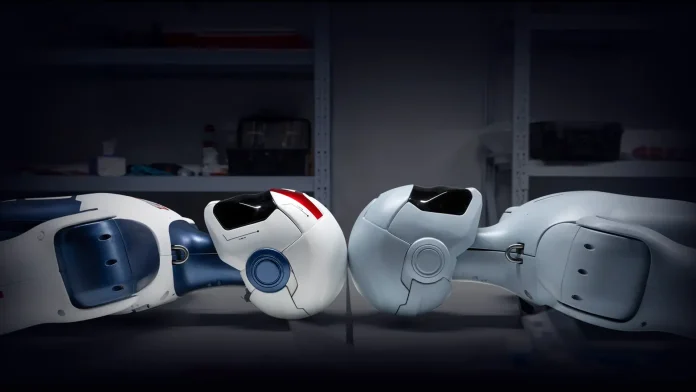
Unitree Robotics, a prominent Chinese robotics firm, is set to make a major international splash by launching its R1 humanoid robot globally through Alibaba’s AliExpress marketplace. This move marks Unitree’s first international commercial product debut and positions the company as a disruptive force in the global humanoid robotics market. With a price tag of approximately $4,370, the R1 is Unitree’s cheapest humanoid robot and potentially the most affordable worldwide, significantly cheaper than Western competitors such as Boston Dynamics’ Spot, which costs upwards of $75,000. This launch not only underscores China’s rapidly growing humanoid robotics industry but also highlights the strategic role of Alibaba’s e-commerce ecosystem in global tech distribution.
Unitree R1’s Global Debut via Alibaba AliExpress Targets Premium Markets
Unitree Robotics will officially release the R1 humanoid robot to international markets including North America, Europe, Japan, and Singapore via AliExpress, Alibaba’s global marketplace platform. This follows Unitree’s initial domestic launch in mainland China last year, where the robot was priced at 29,900 yuan (around $4,370). While the international pricing has not been publicly confirmed, it is expected to remain competitive, maintaining the R1’s status as the world’s most affordable humanoid robot.
The decision to leverage AliExpress is strategic. Last year, Unitree opened a store on AliExpress, and this upcoming launch will see the R1 join AliExpress’s Brand+ channel, a program reserved for internationally recognized brands that offer perks such as free shipping and returns. This affiliation will help build consumer confidence and provide seamless logistics, critical for high-value tech products like humanoid robots.
The initial market selection—North America, Europe, Japan, and Singapore—reflects Unitree’s ambition to penetrate regions with high technological adoption and industrial robotics demand. By tapping into AliExpress’s existing global infrastructure, Unitree can bypass traditional distribution bottlenecks, accelerating its international presence.
Technical Specifications Highlight Unitree’s Innovation and Affordability
The R1 humanoid robot stands 123 centimeters tall and weighs at least 27 kilograms. Designed with agility and sports-like capabilities in mind, Unitree describes the R1 as “born for sport.” Unlike many humanoid robots focused purely on industrial tasks, the R1 can perform dynamic movements such as cartwheels, lying down, standing up, and even running downhill. This emphasis on mobility and dexterity opens up diverse applications from research and education to entertainment and light service roles.
Unitree’s approach combines cutting-edge AI algorithms, advanced sensor integration, and robust mechanical design to achieve these feats at a fraction of the cost of Western counterparts. While Boston Dynamics Spot is well-known for its excellent mobility and robustness, its steep $75,000 price tag restricts widespread adoption. Unitree’s R1 challenges this paradigm by delivering impressive functionality for less than 10% of that price, democratizing access to humanoid robotics for smaller enterprises, research institutions, and hobbyists.
This technological leap is underpinned by China’s mature supply chains and competitive manufacturing landscape, which enable Unitree to produce sophisticated robots at scale more cost-effectively than many Western firms. Moreover, robust government subsidies and support for AI and robotics development further bolster Unitree’s competitive advantage.
Unitree’s Rise as a Global Player in Humanoid Robot Shipments
Unitree Robotics has steadily emerged as a global player in humanoid robot shipments, a position confirmed by multiple industry sources and analysts. The company’s IPO filing earlier this month on the Shanghai STAR Market, seeking $608 million, signals strong investor confidence in its growth trajectory and technological prowess.
In addition to the R1, Unitree is actively pushing intelligent robots into various sectors such as logistics, manufacturing, and services. This diversified approach helps the company tap into burgeoning demand for automation and AI-powered robotics solutions across industries.
The partnership with Alibaba amplifies Unitree’s global ambitions. Alibaba’s vast ecosystem, including cloud computing, AI research, and international e-commerce infrastructure, provides a powerful platform for scaling Unitree’s products worldwide. The April 9, 2026, event at Alibaba’s Xixi campus, where the R1 was unveiled for global markets, underscored the strategic synergy between the two companies.
China’s humanoid robotics industry as a whole is scaling rapidly, fueled by government initiatives, expanding R&D capabilities, and increasing adoption by manufacturing and service sectors. Unitree’s launch via AliExpress exemplifies how Chinese robotics firms are leveraging e-commerce and AI advancements to accelerate global market entry and compete head-to-head with established Western players.
Implications of Unitree’s Affordable Humanoid Robot
Unitree’s global launch of the R1 humanoid robot has broader geopolitical and industrial ramifications. The company’s aggressive pricing strategy and international distribution through Alibaba represent a new phase in China’s tech export ambitions, particularly in cutting-edge AI and robotics.
From a geopolitical standpoint, the R1’s availability in North America, Europe, and Japan challenges Western dominance in robotics and AI markets, reflecting China’s growing technological self-reliance and innovation capabilities. This is especially significant amid ongoing trade tensions and technology decoupling efforts between China and the West. By providing affordable, high-quality humanoid robots, Unitree could capture market share previously inaccessible to Chinese firms due to cost or regulatory barriers.
On the industrial front, the R1’s debut lowers the entry barrier for companies and institutions seeking to integrate humanoid robots into operations. This democratization could accelerate automation adoption in sectors such as warehousing, healthcare, education, and entertainment. Furthermore, Unitree’s focus on dynamic, sports-capable movements expands the scope of potential use cases beyond traditional industrial robots.
Alibaba’s involvement also points to a new model for Chinese tech firms to scale internationally—not solely through direct sales or partnerships with Western distributors but via homegrown e-commerce ecosystems with global reach. This approach could redefine global supply chains and distribution strategies for AI and robotics products.
Unitree’s R1 as a Catalyst for Global Humanoid Robot Market Disruption
Unitree Robotics’ launch of the R1 humanoid robot on Alibaba’s AliExpress platform signals a pivotal moment for the global humanoid robotics market. By offering such a cheap humanoid robot with impressive agility and versatility, Unitree is poised to disrupt the status quo dominated by high-cost Western players.
The strategic partnership with Alibaba not only facilitates seamless international market entry but also exemplifies China’s integrated approach to technology commercialization—leveraging manufacturing strength, AI innovation, government support, and e-commerce platforms in tandem.
As the R1 becomes available in key global markets, it will be closely watched as a barometer of China’s growing influence in AI and robotics. For businesses, researchers, and consumers worldwide, the R1’s affordability and capabilities may herald a new era where humanoid robots are no longer niche luxury items but practical tools driving productivity and innovation across diverse sectors.