
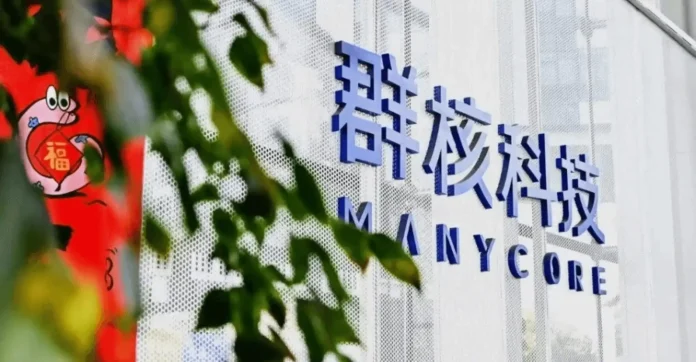
On April 9, 2026, Manycore Tech, a leading spatial intelligence platform provider and one of the six flagship tech startups from Hangzhou known as the “Six Little Dragons,” launched its IPO on the Hong Kong Stock Exchange. South China Morning Post reports that the company aims to raise about HK$1.02 billion (around US$130 million) by offering 161 million shares priced between HK$6.72 and HK$7.62. The IPO closes on April 14, with trading starting April 17 under stock code 00068. Manycore is the first among the Six Little Dragons to tap public capital markets, signaling the growing maturity of Hangzhou’s new tech generation.
The Six Little Dragons—DeepSeek, Unitree Robotics, Deep Robotics, Game Science (creator of “Black Myth: Wukong”), BrainCo, and Manycore Tech—form a cluster of innovation across AI, robotics, gaming, and spatial computing. Manycore’s IPO unlocks fresh capital and sets a benchmark for its peers, highlighting Hangzhou’s rise as a tech hub beyond giants like Alibaba and Hikvision.
Strategic Positioning in the Spatial AI and Design Software Market
Manycore Tech specializes in spatial intelligence, integrating AI with physical and digital environments to enhance design and spatial planning. Its flagship products, Kujiale/KuSpace and Coohom, have gained traction domestically and internationally. Coohom competes directly with Autodesk, the global leader in CAD and spatial design software. The platform serves over 10 million designers and 100,000 enterprise clients worldwide, showing strong market penetration.
Spatial AI is crucial to the digital transformation of architecture, engineering, and construction (AEC). Manycore’s AI-driven spatial intelligence enables faster, more intuitive design workflows, shorter project turnaround, and better visualization. This edge allows Manycore to challenge entrenched incumbents like Autodesk, especially where cost and localization matter.
Financial Trajectory Reflecting Growth and Profitability Challenges
Manycore’s financials over the past three years show steady growth with challenges. Revenues rose from 664 million yuan in 2023 to a projected 820 million yuan in 2025, a CAGR of about 11.2%. Gross margins improved from 76.8% to 82.2%, indicating better efficiency and pricing power.
Despite reported net losses narrowing from 646 million yuan in 2023 to an estimated 428 million yuan in 2025, Manycore turned adjusted net income positive in 2025, posting a modest profit of 57.1 million yuan. This suggests core operations are moving toward sustainable profitability. The company expects a reported loss again in 2026 due to continued R&D and international expansion investments. Such patterns are typical for high-growth AI startups requiring upfront investment before scaling.
Institutional Backing Signals Confidence in Long-Term Growth
The IPO attracted strong cornerstone investor support, with HK$454.5 million subscribed by institutions including Taikang Life Insurance, Sunshine Life Insurance, GF Fund, Goldstream Investment, South Korea’s Mirae Asset, Hesai Group, and CR Construction Group. This mix of domestic and international investors underscores Manycore’s appeal as a strategic bet on China’s spatial AI and design tech sector.
These investors bring capital and strategic partnerships to aid Manycore’s market expansion. Mirae Asset’s involvement signals potential entry into South Korean and broader Asian markets. Construction and infrastructure groups like CR Construction align with Manycore’s AEC applications, potentially accelerating customer acquisition and integration.
Geopolitical and Industry Implications of the IPO
Manycore’s public debut fits China’s ambition to dominate next-generation AI and reduce reliance on foreign software giants. Spatial AI, with applications in smart cities, digital twins, and intelligent manufacturing, is a strategic focus under China’s national AI plan. Manycore’s IPO and the rise of the Six Little Dragons reflect decentralization of China’s tech innovation beyond Beijing and Shenzhen, with Hangzhou emerging as a key node.
Indigenous spatial AI platforms like Manycore challenge Western incumbents such as Autodesk. Amid US-China tech decoupling and stricter cross-border data scrutiny, Manycore’s growth could reduce China’s dependence on foreign spatial design tools, advancing Beijing’s goal of technological self-reliance.
Choosing Hong Kong as the listing venue leverages the city’s role as a financial gateway for Chinese tech firms seeking international capital without mainland regulatory complexities. It balances geopolitical sensitivities with commercial needs by connecting global investors and mainland markets.
Hangzhou’s Ecosystem and the Future of the Six Little Dragons
Manycore’s IPO success tests the broader ecosystem supporting the Six Little Dragons. Each specializes in cutting-edge domains like robotics, AI, gaming, and brain-computer interfaces, but public listing validates business models and scales operations. Manycore’s ability to attract institutional capital and show financial progress may spur follow-on investments and IPOs from sibling startups, accelerating Hangzhou’s tech cluster maturation.
The city’s support through incubators, venture capital, and government initiatives has fostered innovation. As these companies grow, Hangzhou’s profile as a rival to Beijing and Shenzhen in China’s innovation landscape will strengthen. This cluster effect could boost talent inflows, cross-industry collaboration, and international partnerships, positioning Hangzhou as a leading AI and spatial computing hub.
IPO as a Catalyst for China’s Spatial AI Ambitions
Manycore Tech’s $130 million Hong Kong IPO is pivotal for the company and Chinese tech. It validates the “Six Little Dragons” initiative and highlights Hangzhou’s emergence as a powerhouse in AI-driven spatial intelligence. Strategically, the IPO aligns with China’s goal to build indigenous software ecosystems competitive globally amid geopolitical tensions.
Financially, Manycore’s path reflects typical AI startup challenges—balancing rapid growth with investment-driven losses while moving toward profitability. Strong institutional backing and market reception show confidence in its long-term value.
As Manycore leads the Six Little Dragons into public markets, investors, policymakers, and industry watchers will closely monitor this cohort. Their success or failure will influence Hangzhou’s and China’s standing in the global AI and tech innovation race for years.