
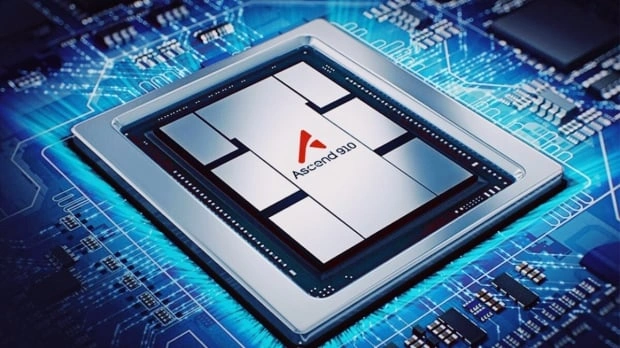
The landscape of AI hardware in China is undergoing a seismic shift, driven by a massive surge in demand for Huawei Ascend 910C AI chip. This unprecedented appetite for domestic computing power has reportedly driven the price of the Ascend 910C up by approximately 20%, signaling a critical turning point in China’s concerted effort to break its dependence on foreign technology, specifically Nvidia’s dominant CUDA software ecosystem. The surging demand for the Ascend 910C highlights the growing maturity and acceptance of domestic AI hardware solutions among leading Chinese tech companies.
The catalyst for this recent surge is the highly anticipated launch of DeepSeek V4, the next-generation large language model from the prominent Chinese AI startup. According to industry reports, DeepSeek is preparing to deploy its V4 model entirely on Huawei-designed chips, a move that represents a significant vote of confidence in the maturity and capability of the Ascend architecture. DeepSeek’s decision to rely on domestic hardware for its flagship model is a powerful endorsement of Huawei’s technological progress and a clear signal that viable alternatives to Nvidia’s GPUs are emerging.
DeepSeek’s Move Part of Broader Trend
DeepSeek’s decision to pivot towards Huawei hardware is emblematic of a broader trend within the Chinese tech industry. Faced with increasingly stringent US export controls that restrict access to Nvidia’s most advanced GPUs, Chinese companies are aggressively seeking viable domestic alternatives. The Ascend 910C, Huawei’s flagship AI accelerator, has emerged as the primary contender, offering performance metrics that, while perhaps not matching the absolute peak of Nvidia’s latest offerings, are increasingly sufficient for training and running complex AI models. The growing adoption of the Ascend 910C demonstrates that Chinese companies are willing to invest the time and resources required to transition to domestic hardware platforms.
The implications of DeepSeek V4 running on the Ascend 910C extend far beyond hardware procurement; it represents a direct challenge to the software moat that has long protected Nvidia’s market dominance. Nvidia’s CUDA platform has been the industry standard for AI development, creating a sticky ecosystem that makes it difficult for developers to switch to alternative hardware. By successfully training and deploying a state-of-the-art model like V4 on Huawei’s proprietary software stack (CANN), DeepSeek is demonstrating that it is possible to break free from the CUDA ecosystem. This is a crucial development, as the software ecosystem is often the most significant barrier to entry for new AI hardware platforms.
To meet this exploding demand, Huawei is rapidly scaling up its production capabilities. The company reportedly plans to produce approximately 600,000 Ascend 910C chips in 2026, more than doubling its output from the previous year. Furthermore, Huawei has set an ambitious target for its total Ascend output capacity, aiming for 1.6 million units. This massive expansion in manufacturing capacity is essential to satisfy the needs of domestic tech giants, research institutions, and government-backed computing centers. Huawei’s ability to scale production rapidly will be a key factor in determining the long-term success of the Ascend platform.
Nvidia’s Market Share Falls
The success of the Ascend 910C is also reflected in the shifting market dynamics within China. Reports indicate that Nvidia’s market share in the country has fallen below 60%, a significant decline from its near-monopoly position just a few years ago. Huawei’s rotating chairman, Xu Zhijun, recently stated that the company aims to become “an alternative that ensures uninterrupted global AI computing power supply,” highlighting Huawei’s ambition to not only serve the domestic market but eventually compete on the global stage. This ambition underscores Huawei’s determination to establish itself as a major player in the global AI hardware market.
The transition to domestic hardware is not without its friction. Developers must invest significant time and resources to adapt their codebases and optimize their models for the Ascend architecture. While Huawei has made strides in improving its software tools and developer support, the ecosystem still lags behind the maturity and ubiquity of CUDA. Overcoming this software barrier will require sustained investment and collaboration between Huawei and the broader developer community.
Despite these challenges, the momentum behind the Ascend 910C appears unstoppable. The combination of geopolitical necessity, massive domestic demand, and rapid technological improvement is creating a powerful tailwind for Huawei’s AI ambitions.
The 20% surge in demand for the Huawei Ascend 910C, fueled by the impending launch of DeepSeek V4, marks a watershed moment in China’s pursuit of technological self-reliance. By proving that cutting-edge AI models can be successfully developed and deployed outside the Nvidia ecosystem, Chinese companies are reshaping the global semiconductor landscape. As Huawei continues to ramp up production and refine its software stack, the Ascend platform is poised to become a formidable force, fundamentally altering the dynamics of the AI hardware market.