
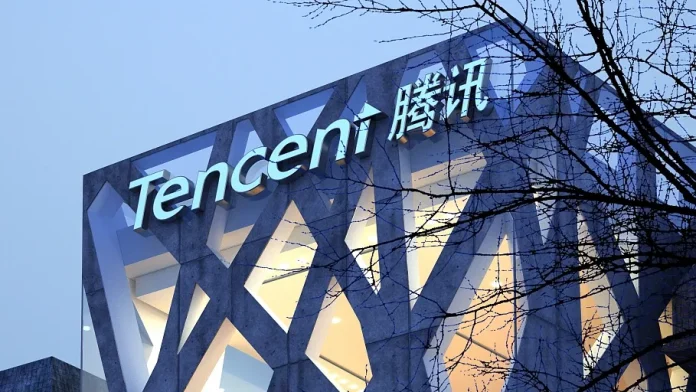
Tencent Holdings, the Chinese technology and entertainment conglomerate, has publicly pledged to significantly increase its AI investment throughout 2026. Reuters reports that this strategic commitment comes in the wake of a challenging period where stringent US export controls on advanced semiconductors forced the company to recalibrate its capital expenditure (capex) plans and adapt its AI development roadmap. The announcement highlights Tencent’s determination to overcome external constraints and maintain its leadership position in the highly competitive AI landscape.
The announcement underscores Tencent’s determination to remain a dominant force in the rapidly evolving AI landscape, despite the geopolitical headwinds that have complicated access to the high-performance computing hardware essential for training massive AI models. The company’s leadership has recognized that sustained, aggressive investment in AI is not merely an option, but a strategic imperative to maintain competitiveness across its diverse portfolio of services, which spans gaming, social media, cloud computing, and enterprise software. AI is increasingly viewed as the foundational technology that will drive future growth and innovation across all of Tencent’s business units.
From Defensive to Offensive Strategy with Higher AI Investment
The impact of US chip curbs on Tencent’s operations has been tangible. The restrictions on acquiring top-tier AI accelerators, such as Nvidia’s most advanced GPUs, created bottlenecks in the company’s infrastructure expansion plans. This forced Tencent to optimize its existing computing resources, explore alternative hardware solutions, and delay certain capex initiatives while the supply chain stabilized and adapted to the new regulatory reality. The company had to navigate a period of uncertainty, carefully managing its hardware inventory while seeking out domestic alternatives and optimizing its software stack to run more efficiently on available hardware.
However, the pledge for higher AI investment in 2026 signals a shift from a defensive posture to an offensive strategy. Tencent is now focusing on maximizing the efficiency of the hardware it can acquire and heavily investing in software optimization, algorithmic improvements, and the development of proprietary technologies to offset hardware limitations. This strategic pivot demonstrates Tencent’s resilience and its ability to adapt to a changing technological and geopolitical environment.
A key area of focus for this increased investment is the continued development and refinement of Tencent’s Hunyuan large language model. The company aims to deeply integrate Hunyuan across its vast ecosystem, enhancing user experiences in flagship products like WeChat and QQ, while also providing powerful AI-driven tools for its enterprise cloud customers. By embedding AI capabilities into its core services, Tencent seeks to drive user engagement, create new monetization avenues, and solidify its position as a leading provider of digital infrastructure in China. The Hunyuan model is central to Tencent’s strategy of creating a pervasive AI ecosystem that touches every aspect of its users’ digital lives.
Cultivating a Strong Domestic AI Ecosystem
Furthermore, Tencent is directing significant resources towards AI applications in its highly lucrative gaming division. The company is exploring the use of generative AI to streamline game development processes, create more dynamic and responsive non-player characters (NPCs), and personalize gaming experiences. This focus on AI-driven innovation in gaming is seen as crucial for maintaining Tencent’s global leadership in the sector. By leveraging AI to create more immersive and engaging gaming experiences, Tencent aims to attract and retain players in an increasingly competitive market.
The increased investment will also likely support Tencent’s efforts to cultivate a robust domestic AI ecosystem. This includes supporting startups, investing in academic research, and fostering the development of domestic semiconductor alternatives. While achieving parity with the most advanced foreign chips remains a long-term challenge, Tencent’s financial backing and massive scale can significantly accelerate the maturation of China’s indigenous AI hardware and software supply chain. Tencent’s role as a major consumer of AI hardware gives it significant influence in shaping the development of the domestic semiconductor industry.
Tencent’s strategic pivot highlights the resilience and adaptability of Chinese tech giants in the face of external pressures. Rather than retreating, the company is doubling down on its core technological priorities, finding innovative ways to navigate constraints and drive progress.
International Outlook
Another dimension of Tencent’s AI strategy involves its international operations. While the domestic market remains the primary focus, Tencent is keenly aware that the long-term battle for AI supremacy will be fought on a global stage. The company is exploring opportunities to deploy its AI capabilities in international markets, particularly in Southeast Asia, where its gaming and social media products already have a significant presence. By leveraging its AI-driven content recommendation and personalization technologies, Tencent aims to deepen user engagement and drive revenue growth in these markets. This international dimension of its AI investment strategy underscores the company’s ambition to be a global, not merely a domestic, AI powerhouse.
In conclusion, Tencent’s pledge to boost AI investment in 2026 marks a critical juncture in the company’s technological trajectory. By aggressively funding the development of its Hunyuan model, optimizing its infrastructure, and integrating AI across its diverse business lines, Tencent is positioning itself to thrive in the next era of digital innovation. The company’s ability to execute this strategy effectively, despite the ongoing challenges posed by chip export controls, will be a key determinant of its future success and its role in shaping the global AI landscape.