
In a decisive move to solidify China as a global powerhouse for biomedical innovation, Beijing authorities have unveiled a sweeping set of policies specifically targeting advancements in AI drug discovery, high-tech surgical robots, and global clinical trials. Caixin reports that the “Several Measures to Support the High-Quality Development of Innovative Medicine (2026 Edition),” released on April 7, outlines 32 specific tasks designed to accelerate the integration of cutting-edge technology across the entire pharmaceutical value chain. This comprehensive policy framework signals Beijing’s ambition to lead the world in the intersection of AI and healthcare.
Spearheaded by the municipal medical security bureau in collaboration with eight other government departments, the comprehensive policy document reflects a coordinated, whole-of-government approach to fostering a thriving biomedical ecosystem. The measures span the entire lifecycle of medical innovation, from upstream academic research and clinical trials to regulatory approval, commercial distribution, and frontline application in hospitals. This holistic approach ensures that innovation is supported at every stage, removing bottlenecks and accelerating the path from laboratory to patient.
AI in Drug Discovery and Surgical Robots
A central pillar of the new policy is the aggressive promotion of AI in drug discovery. The traditional drug development process is notoriously time-consuming and expensive, often taking over a decade and billions of dollars to bring a new therapy to market. By leveraging AI algorithms to analyze vast datasets, predict molecular interactions, and optimize clinical trial designs, Beijing aims to drastically reduce these timelines and costs. The policy sets an ambitious target of developing 15 advanced AI or organ-on-a-chip models to support this effort. These models will serve as critical infrastructure for pharmaceutical companies and research institutions, enabling them to identify promising drug candidates more efficiently.
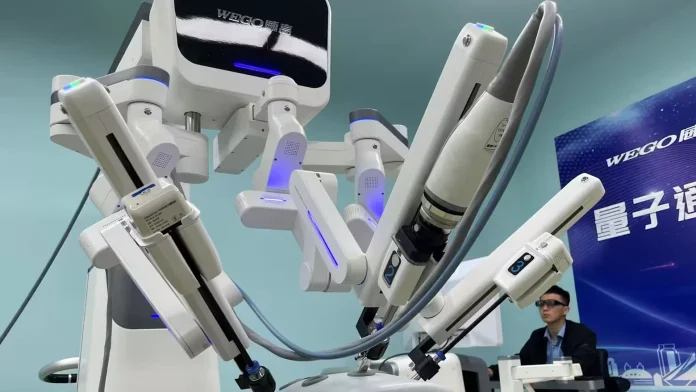
Furthermore, the measures strongly emphasize the development and deployment of surgical robots. These advanced systems offer unparalleled precision, flexibility, and control, enabling minimally invasive procedures that improve patient outcomes and reduce recovery times. To encourage the adoption of these technologies, the policy mandates that the integration of surgical robots be supported through the city’s medical insurance framework, making these advanced treatments more accessible to patients. This financial support is crucial for driving widespread adoption and incentivizing further innovation in surgical robotics.
The policy also addresses the critical need for high-quality data to fuel AI development. Beijing plans to establish 10 high-quality medical datasets, which will be made available to more than 20 designated enterprises. This initiative aims to overcome one of the primary bottlenecks in medical AI: the lack of standardized, annotated, and privacy-compliant data necessary for training robust algorithms. By creating these centralized datasets, Beijing is providing the essential raw material needed to train the next generation of medical AI models.
Healthcare Institutions at the Center
To ensure that innovation translates into clinical practice, the measures place significant requirements on healthcare institutions. Hospitals in Beijing are now mandated to allocate at least 6% of their revenue to research and development activities. This bold requirement is designed to foster a culture of innovation within the healthcare system and ensure that hospitals are active participants in the development and testing of new technologies. This mandate will drive closer collaboration between clinical practitioners and technology developers, ensuring that new solutions address real-world medical needs.
The 2026 Edition of the measures builds upon a strong foundation. In 2025, Beijing’s biomedical industry reached a valuation of 1.13 trillion yuan ($165.34 billion), representing a 6.5% year-on-year growth. The city also led the nation in the approval of innovative medical products, including 6 new drugs, 10 medical devices, and 11 Class III AI medical devices. The new policy aims to accelerate this momentum, setting a target of facilitating 120 international clinical trials to enhance the global competitiveness of Beijing’s biomedical sector.
Goal: to Become a Global Leader in Biotech and AI
The release of these 32 measures underscores China’s broader strategic ambition to lead the world in biotechnology and artificial intelligence. By creating a highly supportive regulatory and financial environment, Beijing is actively courting domestic and international talent, investment, and enterprises. The integration of AI into drug discovery and the widespread adoption of surgical robots represent a paradigm shift in healthcare, promising more effective treatments and improved patient care.
The timing of the policy release is also significant. It comes as global pharmaceutical and medical device companies are increasingly looking to China as both a major market and a source of innovation. By streamlining regulatory pathways and offering financial incentives, Beijing aims to attract multinational corporations to conduct clinical trials and establish research centers within the city. This strategy of opening up to international collaboration, while simultaneously building domestic capabilities, reflects a sophisticated understanding of how to accelerate technological development in a globally competitive environment. The 120 international clinical trial target is not merely a number; it represents a deliberate effort to integrate Beijing’s biomedical ecosystem into the global research network.
Beijing’s comprehensive policy push marks a significant acceleration in the convergence of AI and biomedicine. The 32 measures provide a clear roadmap for transforming the city’s healthcare ecosystem, prioritizing technological innovation, data accessibility, and clinical integration. As these policies are implemented, Beijing is poised to become a critical node in the global biomedical innovation network, driving advancements that could reshape the future of medicine.