
In a bold move to address the insatiable energy and cooling demands of its rapidly expanding artificial intelligence sector, China is increasingly turning to innovative infrastructure solutions: subsea data centers powered by offshore wind farms. This strategic shift aims to alleviate the computing bottlenecks that threaten to constrain the country’s AI ambitions while simultaneously advancing its sustainability goals. The convergence of AI infrastructure with renewable energy and marine engineering represents a novel approach to one of the tech industry’s most pressing challenges.
The exponential growth of AI, particularly the training and deployment of large language models (LLMs), requires massive amounts of computational power. This, in turn, translates into enormous electricity consumption and the generation of significant heat. Traditional land-based data centers are struggling to keep pace with these demands, facing challenges related to land availability, energy costs, and the environmental impact of cooling systems. As AI models grow in size and complexity, the power requirements for training them have skyrocketed, putting immense strain on local power grids and raising concerns about the carbon footprint of the AI industry.
Strategic Implications for China
To overcome these hurdles, Chinese technology companies and infrastructure developers are exploring the depths of the ocean. Subsea data centers offer several compelling advantages over their terrestrial counterparts. First and foremost is the natural cooling provided by the surrounding seawater. By submerging server racks in the ocean, operators can drastically reduce the energy required for cooling, which typically accounts for a substantial portion of a data center’s total power consumption. The constant, low temperature of the deep ocean provides a highly efficient and passive cooling mechanism, eliminating the need for energy-intensive air conditioning systems.
Furthermore, locating data centers offshore allows for direct integration with renewable energy sources, specifically offshore wind farms. This synergistic approach creates a self-sustaining ecosystem where the energy generated by the wind turbines directly powers the submerged servers. This not only reduces the carbon footprint of the AI infrastructure but also mitigates the strain on the terrestrial power grid. By co-locating data centers with offshore wind farms, developers can minimize transmission losses and ensure a reliable supply of clean energy.
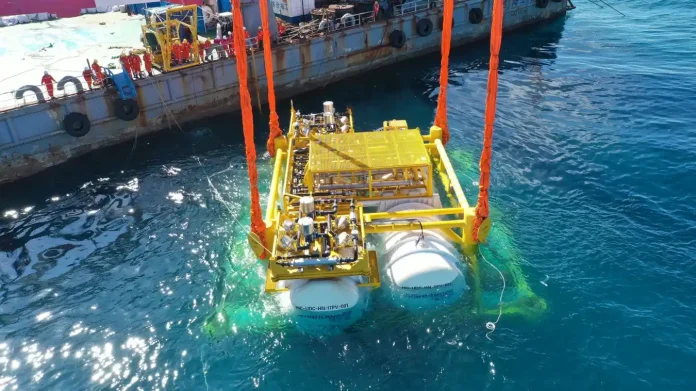
One of the most prominent examples of this initiative is the Hainan Undersea Data Center project. Located off the coast of Sanya in southern China, this ambitious undertaking aims to deploy dozens of data cabins on the ocean floor. The project’s developers estimate that the subsea facility will consume significantly less energy and water compared to a traditional data center of similar capacity, resulting in substantial cost savings and environmental benefits. The Hainan project serves as a critical testbed for evaluating the long-term viability and scalability of subsea data center technology.
AI Development and Green Energy Solutions
The integration of subsea data centers with offshore wind energy aligns perfectly with China’s broader strategic objectives. The country has set ambitious targets for carbon neutrality and is investing heavily in renewable energy infrastructure. By coupling AI development with green energy solutions, China aims to demonstrate that technological advancement and environmental stewardship can go hand in hand. This approach also supports China’s “Eastern Data, Western Computing” initiative by providing alternative, sustainable computing hubs in coastal regions where data demand is highest.
However, the deployment of subsea data centers is not without its challenges. The harsh marine environment poses significant engineering and maintenance hurdles. Ensuring the reliability and longevity of submerged equipment requires specialized materials, robust sealing technologies, and innovative maintenance protocols. Saltwater corrosion, biofouling, and the immense pressure of the deep ocean present formidable obstacles that must be overcome. Additionally, the initial capital expenditure for constructing and deploying subsea infrastructure is substantial, requiring significant upfront investment and specialized marine engineering expertise.
Despite these challenges, the potential benefits of subsea data centers are driving continued investment and innovation in the sector. As AI models become increasingly complex and computationally intensive, the need for efficient and sustainable infrastructure will only grow. China’s proactive approach to exploring subsea solutions positions it at the forefront of this emerging technological frontier. The successful deployment of these systems could provide a significant competitive advantage for Chinese AI companies by lowering operational costs and ensuring access to sustainable computing power.
Future Outlook
The success of these initiatives could have far-reaching implications for the global technology industry. If China can demonstrate the viability and scalability of subsea data centers powered by offshore wind, it could establish a new paradigm for AI infrastructure development worldwide. This would not only accelerate the advancement of AI technologies but also contribute significantly to global efforts to combat climate change. As the tech industry grapples with the environmental impact of AI, subsea data centers offer a promising pathway towards a more sustainable digital future.
In conclusion, China’s turn to subsea data centers and offshore wind energy represents a strategic response to the dual challenges of AI computing bottlenecks and environmental sustainability. By harnessing the natural cooling properties of the ocean and the renewable power of the wind, China is pioneering a new approach to infrastructure development that could shape the future of the global technology landscape. As these projects move from pilot phases to full-scale deployment, their impact on the AI industry and the environment will be closely watched by stakeholders around the world.