
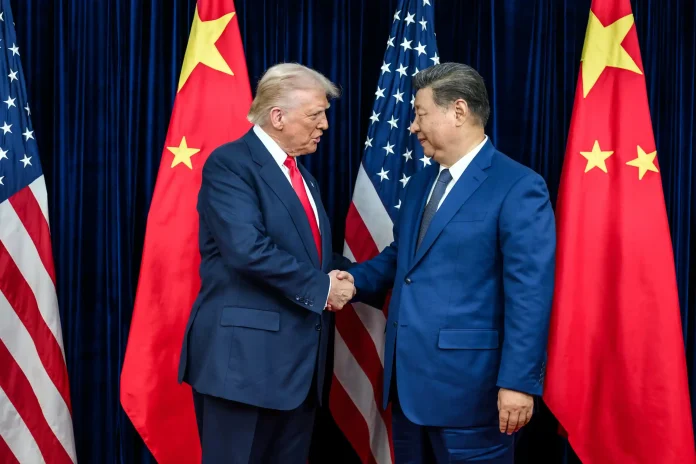
A High-Stakes Diplomatic Encounter
The geopolitical landscape of the global technology sector is bracing for a potential seismic shift as United States President Donald Trump prepares to meet with Chinese President Xi Jinping in May 2026. The highly anticipated summit, which marks Trump’s first visit to Beijing in eight years, comes at a critical juncture in the ongoing US-China tech war. As both nations grapple with the economic fallout of tariffs, export controls, and intense competition over artificial intelligence supremacy, the upcoming talks are expected to define the trajectory of bilateral tech relations for the remainder of the decade.
The diplomatic groundwork for the summit has been characterized by a complex mix of aggressive posturing and quiet concessions. Reuters report that the US administration has launched new Section 301 investigations into Chinese industries in recent months, citing unfair trade practices, prompting immediate reciprocal investigations from Beijing. However, beneath this surface-level friction, significant back-channel negotiations have been underway to stabilize the economic relationship and prevent a full-scale decoupling of the world’s two largest economies.
A crucial preparatory meeting occurred in Paris in March 2026, where US Treasury Secretary Scott Bessent and US Trade Representative Jamieson Greer met with Chinese Vice Premier He Lifeng. The talks, officially described as “constructive,” built upon a 90-day trade truce agreed upon during earlier negotiations in Geneva. These diplomatic efforts highlight a mutual recognition that the current trajectory of escalating tariffs and technological blockades is inflicting severe collateral damage on both domestic economies.
The Quiet Resumption of Nvidia Exports
Perhaps the most significant development leading up to the summit is a quiet but profound shift in US export control policy regarding advanced semiconductors. According to industry sources and trade data, the US Department of Commerce has begun issuing specific licenses allowing Nvidia to export certain advanced artificial intelligence chips to customers in mainland China.
This development represents a major pivot from the draconian export restrictions implemented over the past three years, which were designed to completely sever China’s access to the cutting-edge GPUs required to train frontier AI models. The issuance of these licenses—which reportedly began in a limited capacity between June and August of 2025 and has slowly expanded—suggests a recalibration of Washington’s containment strategy.
The rationale behind this partial relaxation is multifaceted. First, the complete ban on Nvidia sales to China severely impacted the revenue of America’s most valuable tech company, depriving it of billions of dollars from its largest overseas market. Second, the restrictions inadvertently accelerated China’s drive toward semiconductor self-sufficiency, forcing Chinese tech giants to heavily subsidize and adopt domestic alternatives like Huawei’s Ascend ecosystem. By allowing Nvidia back into the market, the US may be attempting to maintain Chinese reliance on American hardware architectures, thereby retaining a degree of long-term leverage.
The Failure of the Global Tariff Regime
The upcoming summit is also heavily influenced by recent domestic legal setbacks for the Trump administration. In February 2026, the US Supreme Court struck down the administration’s attempt to implement a sweeping global tariff regime. The court’s ruling severely curtailed the executive branch’s ability to unilaterally impose broad-based tariffs without congressional approval, effectively removing one of Trump’s primary economic weapons from the negotiating table.
Without the threat of unilateral global tariffs, the US negotiating position heading into the Beijing summit is more constrained. The administration must now rely on targeted Section 301 actions and specific export controls—tools that are highly disruptive but lack the macroeconomic leverage of universal tariffs.
Meanwhile, China approaches the summit from a position of unexpected economic resilience in the trade domain. Despite years of US tariffs and technological sanctions, China recorded a massive trillion-dollar trade surplus in 2025. This record-breaking surplus demonstrates the deep integration of Chinese manufacturing within the global supply chain and the difficulty of forcibly decoupling the US and Chinese economies.
AI Supremacy on the Negotiating Table
While traditional trade imbalances and tariffs will dominate the official agenda, the underlying current of the summit will be the race for artificial intelligence supremacy. The US-China tech war has fundamentally transitioned from a dispute over trade deficits to a strategic conflict over who will control the foundational technologies of the 21st century.
For Xi Jinping, securing reliable access to advanced computing power remains a top priority. The partial resumption of Nvidia exports is a positive signal, but Beijing is acutely aware that these licenses can be revoked at any moment. China’s negotiating strategy will likely focus on securing long-term, predictable access to semiconductor supply chains, while simultaneously continuing its massive state-backed investments in domestic chip manufacturing and alternative architectures like RISC-V.
For the Trump administration, the challenge is balancing the desire to protect American technological leadership with the economic realities of the US tech sector. The US semiconductor industry has lobbied heavily against overly broad export controls, arguing that cutting off the Chinese market starves American companies of the R&D capital necessary to maintain their competitive edge.
The Implications for the Global Tech Sector
The outcome of the May summit will have immediate and profound implications for the global technology industry. If Trump and Xi can negotiate a durable framework that stabilizes semiconductor trade and establishes clear rules of the road for AI development, it could trigger a massive rally in global tech stocks and accelerate the deployment of AI technologies worldwide.
Conversely, if the talks break down and both sides revert to escalatory measures, the global tech supply chain will face unprecedented disruption. A renewed crackdown on chip exports would force a hard bifurcation of the global AI ecosystem, with the US and its allies operating on one technological standard, and China and the Global South operating on another.
As the summit approaches—delayed slightly to mid-May due to ongoing geopolitical crises in the Middle East—the tech world watches with bated breath. The quiet issuance of Nvidia export licenses suggests that a pragmatic compromise is possible, but in the volatile arena of US-China relations, the line between a diplomatic breakthrough and a catastrophic trade war remains razor-thin.