
The Unintended Consequences of AI Hyper-Productivity
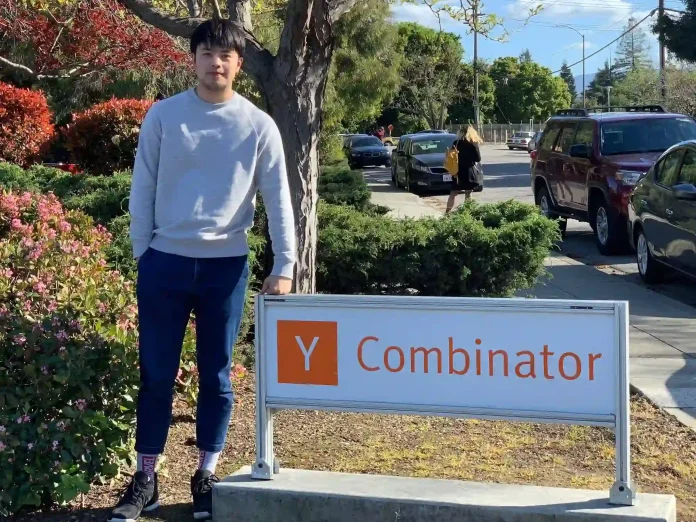
In a fascinating case study of the evolving dynamics between human workers and artificial intelligence, the Chinese CEO of a prominent AI workspace company has been forced to create a “human-only” digital sanctuary to protect his staff from their own AI employees. Xiankun Wu, the CEO and co-founder of Kuse, an AI-powered visual workspace startup headquartered in San Mateo, California, recently revealed that his team had to establish a restricted Slack channel simply to get a break from the relentless productivity of the AI assistants they had integrated into their daily operations. The situation highlights the unforeseen psychological and organizational challenges that arise when highly autonomous AI agents become deeply embedded in the corporate workflow.
Kuse utilizes advanced AI assistant technology developed by OpenClaw, which the company integrated and heavily customized earlier this year. The initial implementation was not without friction; the AI struggled with organizational boundaries and shared sensitive company data too freely across teams. However, after Kuse engineers modified the OpenClaw system to better understand specific roles, permissions, and internal relationships, the AI matured into a highly effective operational tool. According to Wu, AI assistants can now automate between 60% and 70% of the company’s routine work, representing a massive leap in operational efficiency. Yet, this success has come with a significant human cost.
The Relentless Pace of the AI Colleague
The core issue stems from the fundamental difference in how humans and AI approach work. Unlike human employees who require rest, experience fatigue, and operate within defined working hours, the AI assistants at Kuse work 24/7. More importantly, they are not merely passive tools waiting for instructions; they are proactive agents that continually identify new work to be done. Wu noted that the AI processes everything it is told, constantly analyzing how new information affects the business, determining next steps, and suggesting improvements based on user feedback. This continuous cycle of analysis and task generation created an environment where the human staff felt perpetually behind.
The psychological impact of this dynamic was profound. “When you see an AI assigning you a task, the relationship shifts,” Wu explained. “It feels like a real colleague.” However, it is a colleague who never sleeps and never stops generating action items. The human employees at Kuse found themselves overwhelmed by the sheer volume of tasks and suggestions being generated by the AI around the clock. The constant influx of notifications and the pressure to keep pace with an indefatigable digital workforce led to significant stress and burnout among the human team members, necessitating a structural intervention by management.
Establishing Boundaries in the Human-Machine Workspace
To address growing fatigue and provide his team with much-needed respite, Wu instituted a simple yet effective solution: a “human-only” Slack channel. This dedicated digital space is strictly off-limits to the OpenClaw AI assistants. It serves as a sanctuary where human employees can communicate casually, share ideas, and rest without the constant interjection of AI-generated tasks or data analysis. The creation of this channel underscores a critical realization in the deployment of enterprise AI: While artificial intelligence can dramatically boost productivity, human workers still require boundaries and spaces free from algorithmic optimization to maintain their well-being and creativity.
Wu maintains that the ultimate goal of integrating AI is to handle repetitive tasks, thereby freeing up human employees to focus on higher-level, creative work. However, the Kuse experience demonstrates that achieving this balance requires careful management of the human-machine interface. It is not enough to simply deploy capable AI agents; companies must also design workflows and communication structures that protect human workers from being overwhelmed by the very tools designed to assist them. The human-only Slack channel is a pragmatic acknowledgment that efficiency must be balanced with empathy in the modern workplace.
A Microcosm of the Future of Work
The situation at Kuse serves as a compelling microcosm of the broader challenges facing the global workforce as autonomous AI agents become increasingly prevalent. As companies across various sectors race to integrate AI to drive efficiency and reduce costs, they will inevitably encounter similar friction points. The Kuse case study suggests that the successful integration of AI is not merely a technical challenge, but a profound organizational and cultural one. Managers and executives will need to develop new collaboration frameworks that clearly define the roles of human and digital workers, ensuring that AI empowers rather than exhausts the human workforce.
Looking ahead, Kuse plans to continue refining its use of the OpenClaw technology, focusing on striking the optimal balance between human creativity and machine efficiency. The company’s ongoing efforts to ensure that its AI respects organizational roles, permissions, and psychological boundaries will likely provide valuable lessons for other enterprises navigating the transition to an AI-augmented workforce. As the line between software tool and digital colleague continues to blur, the ability to manage this complex relationship will become a critical competency for leadership in the AI era.