
A Strategic Pivot in Pharmaceutical Governance
In a move that signals a profound shift in how the world’s second-largest pharmaceutical market will be governed, China’s National Medical Products Administration (NMPA) has officially issued the “Implementing Opinions on Artificial Intelligence + Drug Regulation.” Released on April 2, 2026, this comprehensive policy framework outlines a highly ambitious roadmap to integrate artificial intelligence across the entire lifecycle of drug and medical device regulation. The directive is not merely a set of guidelines; it is a strategic mandate designed to fundamentally modernize the regulatory infrastructure, reduce approval bottlenecks, and establish China as a global leader in digital-intelligent pharmaceutical governance.
The policy sets two distinct, phased objectives that underscore the urgency of this transformation. By 2030, the NMPA aims to have preliminarily established an integrated innovation system that seamlessly combines drug regulation with advanced AI capabilities. This near-term goal includes the creation of high-quality, domain-specific datasets, the deployment of vertical large language models tailored for regulatory science, and the implementation of intelligent agents capable of executing complex administrative tasks. The ultimate vision, targeted for 2035, is the realization of a fully mature, intelligent drug safety governance pattern characterized by agility, autonomous control, and ecological collaboration across the entire healthcare sector.
Seven Key Scenarios for Digital-Intelligent Empowerment
The core of the NMPA’s strategy is built around the digital-intelligent empowerment of seven key regulatory scenarios, each addressing a critical bottleneck in the current system. The most immediate and impactful of these is the construction of a human-machine collaborative intelligent review and approval system. The NMPA is pushing for the standardization and structuring of electronic submission dossiers, which will serve as the foundational data for new AI models. These models are expected to handle intelligent product classification, task assignment, preliminary dossier review, and even the generation of evaluation reports. By establishing a mechanism of “digital-intelligent empowerment, manual review, and full-process traceability,” the regulator hopes to drastically reduce the time it takes to bring new drugs and medical devices to market without compromising safety standards.
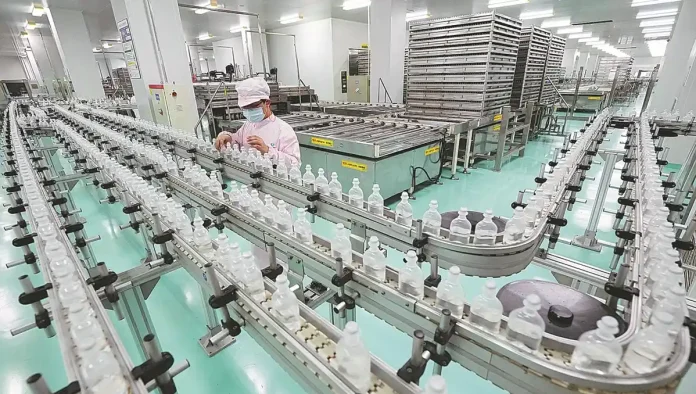
Beyond the review process, the policy mandates the enhancement of full-chain intelligent supervision capabilities. In the research and development stage, this involves the standardized governance of clinical trial data and the formulation of new technical guidelines for electronic recording. During the manufacturing phase, the NMPA envisions the deployment of risk monitoring intelligent agents that can dynamically assess quality and safety risks by analyzing real-time production process surveillance videos, images, and Internet of Things (IoT) sensing data. This represents a shift from reactive, periodic inspections to continuous, proactive oversight.
Furthermore, the distribution and use stages will see a significant digital-intelligent upgrading of the drug traceability system. The goal is to achieve comprehensive coding of all marketed varieties, ensuring full-process traceability from the factory floor to the patient. This will be supported by a multi-code linkage mapping database that connects drug traceability codes with commodity barcodes and medical insurance codes, creating a unified, transparent supply chain ecosystem.
Upgrading Risk Supervision and Law Enforcement
A critical component of the new regulatory framework is the digital-intelligent upgrading of the risk supervision system. The NMPA plans to promote the multi-source aggregation and intelligent assessment of risk clues, improving the consultation mechanism from initial monitoring and early warning through to directive disposal and tracking. This includes the launch of smart drug testing initiatives and the construction of an intelligent analysis and early warning system for consumer complaints and reports. By focusing on high-risk varieties, such as vaccines and blood products, the regulator aims to develop dynamic risk profiles that can predict and mitigate potential public health crises before they escalate.
In tandem with enhanced risk supervision, the policy promotes intelligent and standardized inspection and law enforcement. The NMPA is launching smart inspection initiatives designed to integrate and upgrade existing inspection systems into an intensive, intelligent comprehensive management platform. By leveraging big data from variety dossiers and corporate credit files, the regulator will conduct risk assessments to scientifically determine inspection targets and frequencies. Provincial branches are encouraged to build unified case handling systems that utilize AI for real-time query of regulated entity information, intelligent detection of issue clues, and the automatic generation of legal documents and reports.
Collaborative Efficiency and Industry Coordination
Recognizing that effective regulation requires seamless coordination across multiple jurisdictions and departments, the NMPA is prioritizing the enhancement of collaborative supervision efficiency. The smart supervision platform will serve as the foundation for a national integrated business collaboration system, standardizing process rules and interface standards. This is particularly crucial for complex, cross-regional activities such as clinical trials, registration verification, and the supervision of centrally procured products. The policy also emphasizes cross-departmental information sharing to facilitate the collaborative development of medical services, medical insurance, and pharmaceutical supply—often referred to as the “three medical cares.”
Finally, the NMPA’s directive is not solely focused on internal regulatory processes; it explicitly aims to promote the coordinated digital-intelligent development of the broader pharmaceutical industry. By centering on intelligent regulatory requirements, the NMPA intends to guide the industry toward accelerated digital transformation. This includes the formulation of guiding principles for the standardized application of AI in pharmaceutical research and development, manufacturing, and quality control. As China pushes to elevate its domestic pharmaceutical sector to compete on the global stage, this alignment of regulatory modernization with industrial innovation is viewed as a critical catalyst for sustainable, high-quality growth.