
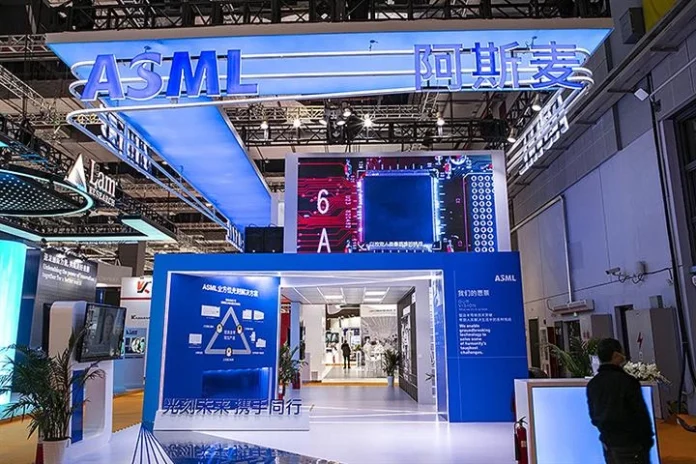
The United States is preparing to significantly tighten its grip on China’s semiconductor industry, proposing new export restrictions specifically targeting advanced chipmaking equipment. The proposed measures aim to further restrict the flow of critical manufacturing tools from companies like Dutch lithography giant ASML and other key suppliers to Chinese foundries, escalating the ongoing technological containment strategy.
This latest move is distinct from the recently introduced MATCH Act in the US Senate, representing a coordinated, multi-pronged effort by Washington to choke off China’s access to the foundational technologies required for advanced AI development. By targeting the equipment used to manufacture chips, rather than just the chips themselves, the US is attempting to permanently stunt China’s ability to build cutting-edge fabrication facilities, thereby limiting its long-term AI capabilities.
The proposed restrictions underscore the strategic importance of semiconductor manufacturing equipment in the global AI race. For Chinese chipmakers, who are already operating under severe constraints, the potential loss of access to ASML’s deep ultraviolet (DUV) lithography systems and other specialized tools would represent a massive setback. The move is likely to accelerate Beijing’s push for complete self-sufficiency in the semiconductor supply chain, a goal that remains technologically daunting but increasingly existential.
The focus on ASML is particularly significant. The Dutch company holds a near-monopoly on the most advanced lithography equipment, which is essential for printing the intricate patterns on silicon wafers that form modern microchips. While the US has already successfully pressured the Netherlands to restrict the export of ASML’s most advanced extreme ultraviolet (EUV) systems to China, the new proposals aim to broaden these restrictions to encompass older, yet still highly capable, DUV systems.
This expansion of export controls reflects a growing recognition in Washington that China is successfully leveraging mature-node manufacturing processes to support its AI ambitions. By restricting access to DUV equipment, the US hopes to impede China’s ability to produce the high volumes of chips required for AI training and inference, even if those chips are not at the absolute cutting edge of miniaturization.
The impact of these proposed restrictions will be felt across the global semiconductor supply chain. For ASML and other equipment manufacturers, the loss of the Chinese market—which has historically been a major source of revenue—will necessitate significant strategic adjustments. Furthermore, the increasing politicization of semiconductor manufacturing equipment is likely to accelerate the fragmentation of the global supply chain, as nations seek to secure their own domestic capabilities and reduce reliance on foreign suppliers.
For China, the proposed restrictions represent a formidable challenge. While domestic equipment manufacturers are making progress, they still lag significantly behind industry leaders like ASML in terms of precision, reliability, and throughput. Overcoming this technological gap will require massive investments in research and development, as well as the cultivation of a highly skilled workforce capable of mastering the complex physics and engineering involved in advanced lithography.
However, the escalating US pressure is also serving as a powerful catalyst for China’s domestic semiconductor industry. The realization that access to foreign equipment can be abruptly severed has galvanized efforts to achieve self-sufficiency, leading to unprecedented levels of state support and private investment. If China can successfully develop its own advanced lithography capabilities, it will not only secure its AI future but also emerge as a formidable competitor in the global semiconductor equipment market.
Ultimately, the proposed US export restrictions on ASML and other equipment manufacturers highlight the central role of semiconductor manufacturing in the ongoing tech war. As both nations vie for dominance in artificial intelligence, control over the foundational technologies required to build advanced chips will remain a critical battleground, shaping the future trajectory of the global tech ecosystem.