
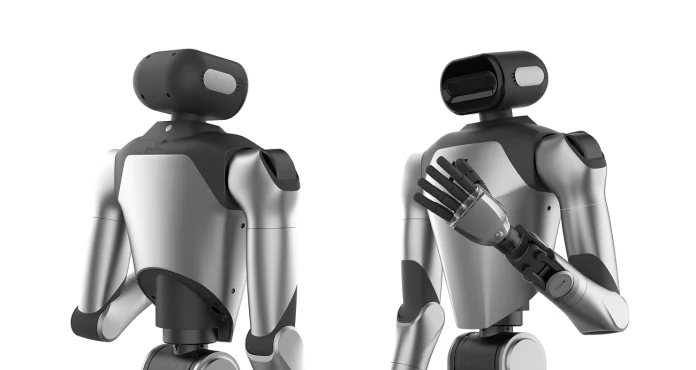
The race to commercialize embodied artificial intelligence in China has received another massive injection of capital. Galaxea AI, a prominent Chinese humanoid robot startup, announced the closure of a 2 billion yuan ($291 million) funding round on April 2, 2026. This latest investment propels the company’s valuation past the 20 billion yuan threshold, cementing its status as a heavyweight in the rapidly crowding robotics sector.
The funding round was notable not just for its size but also for the speed at which it was raised and the composition of the investor syndicate. The 2 billion yuan injection comes a mere two months after Galaxea AI closed a 1 billion yuan Series B round in February, which had valued the company at 10 billion yuan. This rapid doubling of valuation underscores the intense appetite among investors for exposure to the humanoid robotics narrative.
Nearly 20 institutional investors participated in the latest round. Crucially, the syndicate included Lens Technology, a major consumer electronics manufacturer that also serves as Galaxea AI’s hardware and mass production partner. The involvement of a manufacturing powerhouse like Lens Technology suggests that Galaxea is moving aggressively beyond the prototyping phase and is seriously preparing for scaled production. The round was also heavily supported by state-backed funds, reflecting Beijing’s strategic prioritization of robotics and embodied AI as core components of its advanced manufacturing future.
Galaxea AI’s successful fundraise is part of a broader trend of capital concentration within the Chinese robotics industry. Over the past six months, a select group of top-tier startups—including PaXini Tech, Spirit AI, LimX Dynamics, Leju Robotics, and EngineAI—have each raised approximately 1 billion yuan. In early March, Beijing-based Galbot secured 2.5 billion yuan, briefly making it the sector’s most valuable unlisted company.
However, this private market exuberance contrasts sharply with the realities facing publicly traded robotics firms and the broader technical challenges of the sector. The industry is still grappling with significant hurdles related to mass commercialization, battery life, and the reliability of AI models in unpredictable real-world environments.
This reality check is evident in the public markets. Hong Kong-listed UBTech Robotics, a pioneer in the space, saw its shares retreat to around HK$102 in early April, down significantly from a peak of HK$161 in November 2025. Similarly, Swancor Advanced Materials, controlled by robotics firm AgiBot, experienced a sharp share price decline from its mid-January highs.
Despite these public market headwinds, the massive private rounds for companies like Galaxea AI indicate that investors—particularly those aligned with state strategic goals—are willing to look past near-term commercialization challenges. They are betting heavily that the integration of advanced large language models with sophisticated hardware will eventually unlock massive economic value across manufacturing, logistics, and eventually, domestic settings. For Galaxea AI, the $291 million war chest provides the crucial runway needed to refine its technology and navigate the difficult transition from laboratory demonstrations to factory floor deployment.