
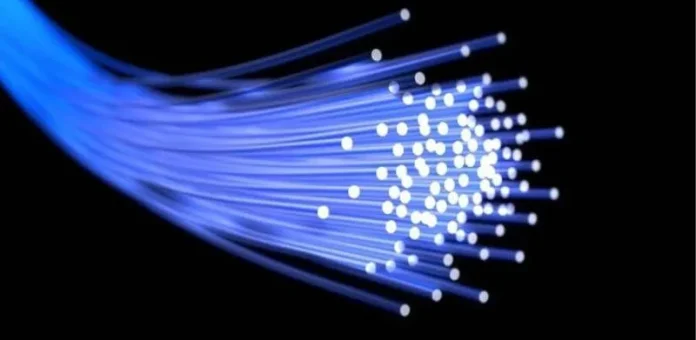
When Nvidia announced a $300 million investment in Corning to build three new optical fiber manufacturing plants in the United States, the headline was about American manufacturing revival. But the deeper story, as the South China Morning Post reports, is about China. The deal has thrown a spotlight on a critical and largely overlooked dimension of the global AI infrastructure race: China’s dominant position across the entire optical fiber value chain, from raw preforms to finished cables, and what that means for the AI data center buildout that Jensen Huang has called “the single largest infrastructure buildout in human history”.
The numbers are striking. In 2025, China accounted for 59 percent of global optical preform output, 57 percent of global optical fiber production, and 47 percent of global optical cable output, according to data from Huatai Securities cited by the South China Morning Post. China is not merely a significant player in the optical fiber market; it is the market. Its dominance spans every stage of the value chain, from the silica preforms that are the raw material for optical fiber to the finished cables that carry data across continents.
Why Optical Fiber Matters for AI
The connection between optical fiber and artificial intelligence may not be immediately obvious, but it is fundamental. AI data centers, the massive facilities that house the GPU clusters used to train and run large language models, require vastly more fiber connectivity than conventional data centers. According to China Post Securities, AI data centers require approximately 10 times as much fiber as traditional data centers.
The reason is architectural. AI training and inference workloads require extremely high-bandwidth, low-latency communication between thousands of GPUs operating in parallel. This communication occurs over optical fiber links that connect individual chips, racks, and clusters. As AI models grow larger and GPU clusters expand to accommodate them, the demand for optical fiber grows proportionally.
Huatai Securities projects that global optical fiber demand will reach 760 million fiber-kilometers in 2026, rising to 889 million fiber-kilometers in 2027. This growth is being driven almost entirely by AI data center construction, which is accelerating globally as hyperscalers like Microsoft, Google, Amazon, and ByteDance race to build the infrastructure needed to train and deploy the next generation of AI models .
The Price Signal
The market has already registered the supply constraints. At the end of 2025, optical fiber was priced at 40 to 50 yuan per fiber-kilometer. By May 2026, prices had risen to more than 200 yuan per fiber-kilometer, a fourfold increase in less than six months, according to Yan Guicheng of China Securities, who discussed the trend in a CCTV interview.
This price surge has been a windfall for Chinese optical fiber manufacturers. The Chinese optical fiber index has risen more than 100 percent year to date, with the sector gaining an additional 8 percent in the week following the Nvidia-Corning announcement. Three companies in particular have seen extraordinary gains: Yangtze Optical Fibre and Cable (listed on both the Shanghai and Hong Kong exchanges), Hengtong Optic-Electric (Shanghai), and Tongding Interconnection Information (Shenzhen) have all risen more than 200 percent year to date.
The irony is sharp: Nvidia’s investment in US manufacturing capacity, framed explicitly as a move to reduce dependence on foreign supply chains, has triggered a rally in Chinese fiber stocks. The reason is simple, even with the Corning investment, the US will remain dependent on Chinese-dominated supply chains for the raw materials and intermediate products that go into optical fiber manufacturing. Corning retains genuine advantages in materials science and advanced manufacturing processes, but China’s closed-loop industrial chain and scale-driven cost advantages are not easily replicated.
The Nvidia-Corning Deal in Detail
The Nvidia-Corning partnership, announced in May 2026, involves a $300 million investment from Nvidia to fund the construction of three new manufacturing facilities in North Carolina and Texas. Under the agreement, Corning will increase its US optical connectivity manufacturing capacity by 10 times, while expanding US fiber production capacity by more than 50 percent.
Nvidia has framed the deal as part of its broader commitment to revitalize American manufacturing. It follows similar partnerships with Lumentum Holdings, Coherent Corp, and Marvell Technology, all focused on building out the optical connectivity infrastructure for AI data centers. The Corning deal is the largest and most strategically significant of these partnerships, given Corning’s position as the world’s leading optical fiber manufacturer outside of China.
Jensen Huang’s framing of the AI infrastructure buildout as “the single largest infrastructure buildout in human history” is not hyperbole. The scale of investment in AI data centers globally is unprecedented, and optical fiber is the connective tissue that makes it all possible.
The Geopolitical Dimension
The fiber supply chain story is a microcosm of a broader pattern in the US-China technology relationship. In sector after sector, rare earth minerals, solar panels, batteries, now optical fiber, China has built dominant positions in the supply chains that underpin the technologies of the future. These positions were built over decades through a combination of state investment, industrial policy, and the relentless pursuit of scale.
The US response, exemplified by the Corning investment, aims to rebuild domestic manufacturing capacity. But this is a slow and expensive process. Building new fiber manufacturing facilities takes years, and matching China’s cost advantages requires sustained investment and policy support. In the near term, the global AI infrastructure buildout will remain heavily dependent on Chinese fiber.
This dependency is not lost on policymakers in Washington. The ongoing US-China technology war has focused primarily on semiconductors and AI models, but the fiber supply chain vulnerability is increasingly on the radar of national security officials. As Huawei’s dominance in AI chips demonstrates, China’s strategic positioning in technology supply chains extends far beyond any single component.
The fiber story also connects to China’s broader infrastructure ambitions. As we reported, TikTok’s $25 billion data center investment in Thailand is just one example of how Chinese tech companies are building the physical infrastructure of the AI age across Asia and beyond. Each of these data centers will require enormous quantities of optical fiber — fiber that, in all likelihood, will come from Chinese manufacturers.
The Chinese Manufacturers to Watch
For investors and industry observers, the fiber story has elevated three Chinese companies to prominence. Yangtze Optical Fibre and Cable (YOFC), a joint venture between Yangtze Communications, Draka, and Corning itself, is the world’s largest optical fiber and cable manufacturer and a direct beneficiary of the AI infrastructure boom. The company’s dual listing in Shanghai and Hong Kong gives it access to both domestic and international capital markets.
Hengtong Optic-Electric is a major supplier of submarine cables and terrestrial fiber, with a growing international footprint. Tongding Interconnection Information specializes in optical fiber and cable for telecommunications and data center applications. All three have seen their valuations surge as the market has recognized the strategic importance of their position in the AI supply chain.
Looking Ahead
The Nvidia-Corning deal is a significant step toward reducing US dependence on Chinese fiber, but it is not a solution. The three new plants will take years to come online, and even at full capacity, they will not displace China’s position as the world’s dominant fiber supplier. In the meantime, the AI infrastructure buildout will continue to flow through Chinese supply chains.
For investors, the fiber story represents one of the clearest examples of how the AI boom is creating value in unexpected places. The companies that make the cables that connect the chips that run the models are, in a very real sense, the infrastructure of the AI age, and China controls most of them.