
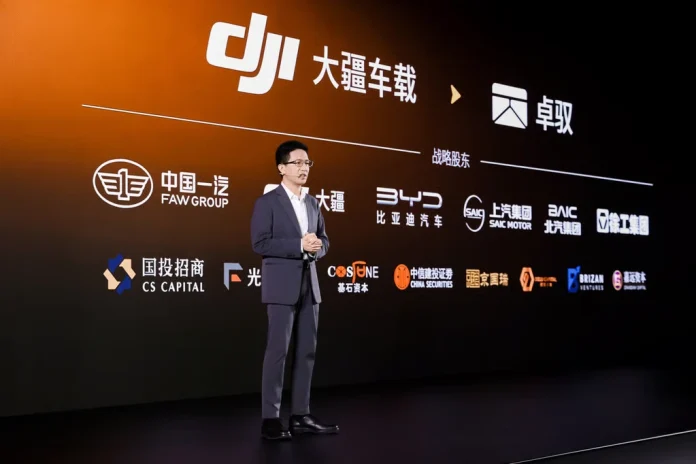
China’s bustling logistics and manufacturing sectors may soon see a significant boost in efficiency as Shenzhen-based start-up ZYT prepares to roll out mass production of semi-autonomous trucks equipped with its proprietary Navigation on Autopilot (NOA) system. The news, first reported by the South China Morning Post on May 5, 2026, underscores how Chinese AI and robotics firms are increasingly leveraging cutting-edge navigation technologies to address key transportation challenges, especially amid a global energy crisis that has heightened demand for fuel-efficient solutions.
From Drones to Trucks: DJI’s Spin-Off Enters Heavy-Duty Logistics
ZYT, a startup spun off from DJI, the world’s leading commercial drone manufacturer, is applying its drone navigation and sensing expertise to heavy trucks. This strategic pivot is particularly noteworthy given DJI’s established reputation for precision control and autonomous flight systems, which now inform ZYT’s approach to semi-autonomous driving on highways.
The company has secured partnerships with all six of mainland China’s top heavy-truck manufacturers, signaling strong industry confidence in ZYT’s technology. According to ZYT’s Vice President Yu Beibei, trucks represent a distinct market compared to passenger vehicles because they hold substantial economic value for manufacturing and logistics firms. “They are willing to pay a premium to own and operate the lorries that prove to be more efficient,” Yu explained, emphasizing the business rationale driving interest in semi-autonomous capabilities.
These partnerships pave the way for ZYT’s first deliveries, which the company expects to commence in the second half of 2026, marking a new chapter in the integration of AI-driven automation in China’s heavy transport sector.
The Semi-Autonomous Edge: L2+ NOA Systems and Fuel Efficiency
ZYT’s Navigation on Autopilot (NOA) system is classified as Level 2 or Level 2+ automation under SAE International standards. This means that while the trucks can operate in semi-autonomous mode—primarily on highways between cities—drivers must remain engaged and keep their hands on the wheel at all times, ready to intervene if necessary.
This cautious approach aligns with broader industry trends where full autonomy remains elusive, especially for heavy vehicles navigating complex road conditions and regulations. ZYT’s NOA system focuses on highway scenarios, optimizing route efficiency and vehicle control to reduce fuel consumption. Early data indicate that trucks equipped with ZYT’s system achieve approximately 3% in annual fuel cost savings, a significant margin given the scale of logistics operations and the current volatility in global oil supply.
The timing of this innovation is particularly pertinent. The ongoing global energy crisis and recent oil supply shocks have intensified the pressure on logistics companies to reduce operational costs and carbon footprints. As a result, semi-autonomous driving solutions that can reduce fuel consumption without the risks of full autonomy are gaining traction.
Strategic Implications in the Context of China’s AI and Transportation Landscape
ZYT’s emergence reflects a broader momentum in China’s AI and robotics sectors, where integration with traditional industries is accelerating. The company’s drone-derived technologies mark a novel cross-pollination of expertise, leveraging Shenzhen’s unique ecosystem of hardware innovation.
This move also aligns with China’s national AI and intelligent driving initiatives. Following Beijing’s AI Plus mandate, the country has prioritized embedding AI across sectors, including transportation, to enhance efficiency and global competitiveness. ZYT’s semi-autonomous trucks could be seen as a practical outcome of these policy drives, particularly as the government pushes for adoption of AI-powered solutions in logistics and manufacturing.
Moreover, the focus on L2+ systems underscores a pragmatic approach to automation in China’s heavy vehicle market. While some voices within China’s self-driving truck industry remain skeptical about the pace of breakthroughs accelerating rollout, ZYT is betting on incremental gains in operational efficiency and cost savings as a viable commercial entry point.
Competitive and Regulatory Environment
ZYT’s partnerships with all the leading heavy-truck manufacturers in China provide a competitive advantage, enabling integration of NOA systems at scale. However, the regulatory landscape continues to shape the possibilities and limits of autonomous driving in China. The government’s cautious stance, evident in recent actions such as halting new robotaxi licenses following safety incidents, suggests that semi-autonomous systems requiring driver oversight may enjoy smoother paths to market.
Additionally, the technology’s reliance on semi-autonomy rather than full autonomy sidesteps some of the more fraught safety and liability questions that have plagued Level 4 and Level 5 autonomous vehicle deployments worldwide. This is especially relevant given the high value and risk profile of heavy trucks, which can lead to severe economic and human consequences in accidents.
Broader Industry Impacts: Fuel Efficiency Meets AI Innovation
The announcement of ZYT’s plans comes amid a period of significant AI-driven innovation in China’s automotive and robotics sectors. Recent months have seen major developments, including Tencent’s deployment of DeepSeek V4 on Huawei Ascend 950 chips and the rising prominence of AI-powered humanoid robotics.
ZYT’s fuel-saving semi-autonomous trucks add a vital piece to this ecosystem, addressing practical challenges in logistics, a sector critical to China’s economy and global supply chains. Even a modest 3% reduction in fuel costs can translate into substantial savings across the hundreds of thousands of heavy trucks operating nationwide, especially as the country navigates pressures from energy price fluctuations and carbon-reduction commitments.
Conclusion: A Step Toward Industrial AI Maturity
ZYT’s ambitious plan to mass-produce semi-autonomous trucks by late 2026 is emblematic of China’s evolving AI landscape, where startups rooted in innovative hardware technologies are forging new paths in traditional industries. By leveraging DJI’s drone navigation expertise and collaborating closely with leading truck manufacturers, ZYT is positioned to make semi-autonomous heavy transport a commercial reality in China’s vast logistics network.
While the deployment focuses on L2+ systems that require driver engagement, the fuel efficiency gains and operational benefits offer a compelling value proposition for logistics operators facing volatile fuel prices. In the broader context, ZYT’s efforts exemplify China’s pragmatic approach to AI adoption, prioritizing incremental, economically justifiable steps over headline-grabbing full autonomy.
As China continues to solidify its role as a global AI powerhouse, developments like ZYT’s semi-autonomous trucks will be critical indicators of how AI technologies translate into real-world industrial impact.