
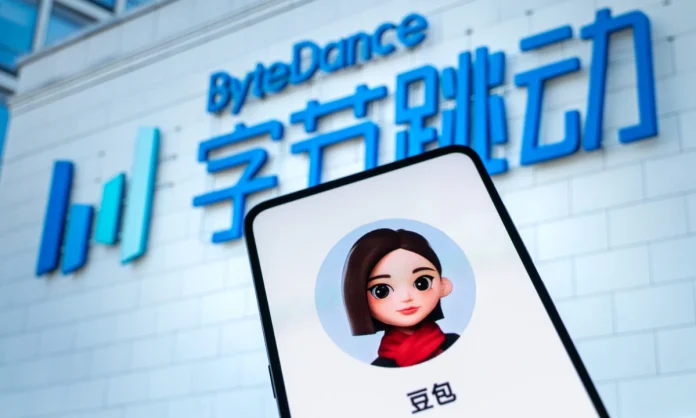
ByteDance, the Beijing-based tech giant best known for TikTok’s Chinese counterpart Douyin, appears to be ushering in a new phase in China’s AI industry with its flagship AI chatbot app Doubao. According to a recent report by the Seoul Economic Daily on May 5, 2026, Doubao, which boasts a staggering 345 million monthly active users (MAU), has begun testing a paid subscription tier priced at 68 yuan per month (roughly $9.40). While ByteDance has yet to officially confirm the full pricing details, this development marks a significant departure from the previously dominant free-access model for AI services in China and signals a broader industry-wide pivot toward monetization.
The transition from free to paid AI services reflects mounting pressure on Chinese AI companies, which have long been engaged in a costly race to capture market share by offering free or heavily subsidized AI-powered tools. This strategy, although effective in user acquisition, has resulted in substantial financial burn rates. ByteDance’s move to introduce a paid subscription tier for Doubao is aligned with similar steps taken by other leading players in the Chinese AI ecosystem, notably Baidu’s Ernie Bot and Moonshot AI’s Kimi chatbot. Both competitors have rolled out paid tiers recently, indicating a market-wide recognition that sustainable business models must eventually replace the “free for all” era.
Doubao’s vast user base positions ByteDance at the forefront of China’s AI chatbot market, but the shift to a subscription model also highlights the challenges faced by AI companies in balancing growth with profitability. ByteDance, which saw its profits plunge by over 70% in 2025 amid heavy AI investments, is clearly seeking new revenue streams to justify its ongoing AI bets. Introducing paid subscriptions for Doubao could help ByteDance curb its cash burn while capitalizing on the app’s enormous popularity.
The Free-AI Era’s Limitations and the Monetization Imperative
China’s AI market has, until recently, been characterized by widespread free access to AI chatbots and related services. This approach was driven by an aggressive strategy to build scale quickly and fend off competition, particularly from Western AI firms. Chinese companies heavily subsidized AI usage, absorbing the high computational costs of large language models (LLMs) to become the market leaders. However, this model’s sustainability has come into question as cloud compute costs soar globally and domestic supply chains face bottlenecks. The recent surge in AI token consumption in China to over 140 trillion daily calls has made free use economically challenging.
Introducing paid tiers is a natural evolution as companies seek to monetize their user bases while maintaining premium offerings. Doubao’s 68 yuan monthly fee is comparable to Baidu’s Ernie Bot pricing and Moonshot AI’s Kimi subscription plans, suggesting a market consensus on pricing strategies. This subscription cost, while modest by international standards, may represent a significant outlay for many Chinese users accustomed to free AI services. The success of paid subscriptions will depend on whether these platforms can demonstrate superior value or features that justify the cost.
Industry Implications and Competitive Dynamics
The broader Chinese AI market is closely watching ByteDance’s experiment with paid subscriptions. Baidu, a pioneer in China’s AI development with its Ernie Bot, has already introduced paid tiers, and Moonshot AI’s Kimi has rapidly gained traction, reportedly crossing $100 million in annual recurring revenue just one month post-launch. These moves collectively mark a shift from user acquisition to monetization, a sign that the market is maturing.
ByteDance’s dominant position with Doubao, a chatbot integrated into its massive social and content ecosystem, gives it an edge in upselling premium features. However, the company faces competition not only from Baidu and Moonshot AI but also from a host of smaller domestic startups and open-source projects that continue to offer free or freemium AI tools. The battle to convert free users into paying customers will be fierce and could reshape market shares.
Moreover, this monetization trend is occurring amidst a complex regulatory and technological backdrop. China recently introduced new draft rules regulating AI interactive services and is pushing for AI technology self-reliance, including chip production. The confluence of regulatory tightening, domestic supply chain constraints, and rising compute costs makes monetization not only desirable but necessary.
Financial Sustainability and User Adoption Challenges
The financial sustainability of China’s AI giants has been under scrutiny, with ByteDance’s 2025 profit plunge emblematic of the sector’s challenges. The company’s willingness to test paid tiers on Doubao may reflect an urgent need to improve margins and reduce dependency on external capital. Yet, questions remain about users’ willingness to pay for AI services in a market conditioned on free access.
Consumer sentiment toward paid AI in China could be mixed. While business and enterprise users are more accustomed to subscription models, individual users may resist paying unless the value proposition is clear, such as access to advanced features, faster response times, or exclusive content. ByteDance’s integration of Doubao into its sprawling ecosystem could create opportunities to bundle services or offer tiered access, helping smooth the transition for users.
Broader Market Consequences and Outlook
ByteDance’s move to monetize Doubao heralds what many analysts see as the end of China’s free-AI era and the beginning of a new phase focused on revenue generation and profitability. This shift will likely accelerate innovation in premium AI features, diversified business models, and possibly new forms of AI integration across China’s digital economy.
Investors will be closely watching the uptake of such paid tiers, as profitability becomes a critical measure of success beyond sheer user numbers. The AI landscape in China is increasingly competitive and capital-intensive, and the ability of companies like ByteDance to balance growth with sustainable economics will determine their long-term leadership.
In this context, the broader AI ecosystem, including chip makers, cloud providers, and industrial users, will feel the ripple effects. For instance, Tencent’s deployment of DeepSeek V4 on Huawei Ascend chips underscores the intensifying demand for premium compute resources, which will put further pressure on pricing and infrastructure investment.
As China’s AI companies refine their monetization strategies, the industry is likely to see a wave of innovation across AI models, service design, user engagement, and regulatory compliance. ByteDance’s Doubao subscription test is a bellwether moment, signaling a market maturing beyond the initial hype and free giveaways, toward a more economically sustainable AI future.