
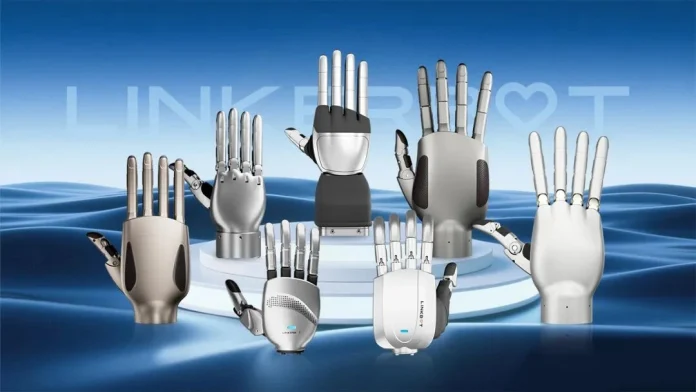
Reuters reports that Linkerbot, the Beijing-based startup that has built what it claims is the world’s most capable dexterous robotic hand, is targeting a $6 billion valuation in its next funding round, according to a Reuters exclusive published May 4, 2026. The announcement comes just days after the company closed a “Series B+” round that valued it at $3 billion, meaning it is seeking to double its valuation within a single fundraising cycle.
The rapid escalation reflects the extraordinary investor appetite for companies positioned at the intersection of humanoid robotics and China’s manufacturing ecosystem. Linkerbot’s trajectory, from founding in 2020 to $3 billion valuation in six years, mirrors the compressed timelines that have characterized China’s AI hardware sector, where government support, deep supply chains, and intense domestic competition have accelerated development cycles that would take a decade or more in other markets.
The Hand That Builds the Future
Linkerbot’s core product is the Linker Hand, a family of dexterous robotic hands that span three mechanical architectures: linkage-driven, tendon-driven, and direct-drive. The company’s flagship models include the L30, a 22-degree-of-freedom tendon-driven biomimetic hand, and the L20, a high-DOF direct-drive variant optimized for industrial applications.
The distinction between these architectures matters for understanding the company’s market position. Linkage-driven hands are mechanically simpler and more durable but offer limited dexterity. Tendon-driven hands, like the L30, more closely replicate the biomechanics of the human hand and are preferred for tasks requiring fine manipulation, such as assembly, surgery simulation, and laboratory work. Direct-drive hands eliminate the compliance and backlash issues associated with tendon systems but require more sophisticated motor control. By offering all three, Linkerbot positions itself as a full-spectrum supplier rather than a niche player.
The company’s applications span research institutions, humanoid robot manufacturers, industrial automation integrators, and what it calls “performance robotics,” a category that includes demonstration systems for trade shows and public events. This breadth of application is both a commercial strength and a strategic signal: Linkerbot is not betting on a single use case but on the broader thesis that dexterous manipulation will become a foundational capability across multiple industries.
Market Dominance and Production Scale
Linkerbot claims to hold more than 80 percent of the global market for high-degree-of-freedom dexterous robotic hands. Reuters, in its exclusive report, describes the company as “the global market leader in highly dexterous robotic hands for humanoids,” a characterization that reflects both the company’s commercial position and the relative immaturity of the competitive landscape.
The company’s current monthly production capacity exceeds 4,000 high-DOF dexterous hands, and it has set a target of delivering more than 10,000 units per month. That scaling trajectory is significant in the context of China’s humanoid robot industry, where smartphone supply chain manufacturers including Lingyi iTech are targeting production of 500,000 humanoid robots per year by 2030. Each of those robots will require at least one pair of hands. At current market share, Linkerbot would be the default supplier for the majority of that demand.
The Series B+ round that closed last week was backed by a consortium of institutional investors including Zhongguancun Science City Fund, BOC Asset Management, and Fosun Capital. The round followed a RMB 1.5 billion ($210 million) Series B completed in February 2026, suggesting that Linkerbot has been raising capital at a pace that reflects both its growth trajectory and the competitive urgency of the humanoid robotics market.
Why Dexterous Hands Are the Bottleneck
The humanoid robot industry has made rapid progress on locomotion, such as bipedal walking, stair climbing, and even running, as demonstrated by the Honor D1’s completion of the Beijing half-marathon in April 2026. But manipulation remains the harder problem. A robot that can walk but cannot reliably grasp, orient, and manipulate objects has limited commercial utility outside of tasks that require only mobility.
The challenge is not purely mechanical. Dexterous manipulation requires the integration of tactile sensing, proprioception, and real-time motor control in ways that current AI systems handle imperfectly. The gap between what a human hand can do and what even the most advanced robotic hand can do remains significant for tasks involving deformable objects, irregular shapes, or surfaces with variable friction.
Linkerbot’s approach to this problem combines hardware design with what it calls “cloud intelligence,” a software layer that handles the real-time control and learning functions that make dexterous manipulation possible. This software-hardware integration is increasingly the differentiating factor in the robotics industry, where the mechanical components are becoming commoditized but the intelligence layer remains proprietary and difficult to replicate.
The Valuation Logic
The jump from $3 billion to a targeted $6 billion valuation in a single funding cycle requires explanation. The most straightforward interpretation is that Linkerbot’s investors expect the humanoid robot market to scale faster than previously modeled, and that the company’s market share will hold as that scaling occurs.
Morgan Stanley has doubled its 2026 forecast for China’s humanoid robot sales to 28,000 units, a 133 percent year-on-year increase. If each of those robots requires two dexterous hands, and Linkerbot retains its claimed 80 percent market share, the implied unit volume for the company in 2026 alone is approximately 44,800 hands. At a production cost that is falling roughly 20 percent annually as supply chain efficiencies from smartphone manufacturing carry over into robotics, the revenue and margin trajectory supports an aggressive valuation.
The more speculative component of the valuation is the software and cloud intelligence business. If Linkerbot’s cloud platform becomes the standard interface for dexterous manipulation control, analogous to what Nvidia’s CUDA became for GPU computing, the company’s addressable market extends well beyond hardware sales to include recurring software licensing, model training services, and integration fees. That optionality is almost certainly priced into the $6 billion target.
Competitive Landscape
Linkerbot’s dominant market position does not mean it operates without competition. Shadow Robot Company in the UK has been building dexterous hands for research applications for more than two decades and maintains a strong position in academic and defense markets. DEXTEROUS Robotics in the US has attracted significant venture funding. In China, several well-capitalized startups are working on competing designs, though none has yet achieved Linkerbot’s production scale.
The more significant competitive threat may come from the humanoid robot manufacturers themselves. Companies like UBTech, Unitree, and Agility Robotics have the engineering capability to develop proprietary hand designs, and vertical integration, building the hand in-house rather than sourcing from a specialist supplier, would give them greater control over cost and performance. Linkerbot’s strategy of positioning itself as a platform supplier, with a software layer that integrates across multiple robot platforms, is partly designed to make that vertical integration less attractive.
Whether that strategy succeeds at $6 billion will depend on how quickly the humanoid robot market scales and whether Linkerbot can maintain its technology lead as competitors invest more heavily in dexterous manipulation. For now, the company’s order book and production trajectory suggest the market is voting in its favor.
(Related:China’s Smartphone Supply Chain Pivots to Humanoid Robot Manufacturing |The Former Huawei Prodigy at the Forefront of China’s Humanoid Robot Revolution)