
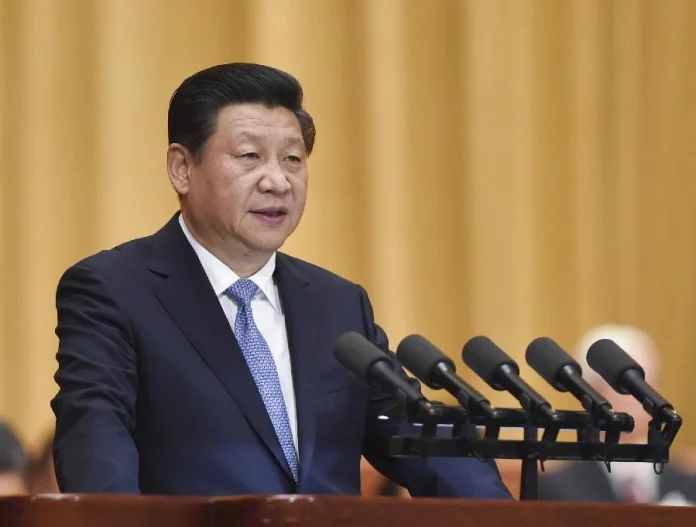
Chinese President Xi Jinping has issued a strong call for the nation to accelerate its capacity for “original innovation,” emphasizing that basic research is the cornerstone of China’s scientific and technological self-reliance. China Daily reports that, speaking at a high-level symposium in Shanghai on April 30, Xi’s remarks underscore Beijing’s determination to break free from its reliance on foreign technology, particularly in the wake of escalating US export controls targeting China’s semiconductor and AI sectors.
The Symposium and Its Directives
During the symposium, Xi urged researchers and policymakers to “seize opportunities, rise to the challenges, prioritize basic research and make consistent efforts to make new achievements.” He stressed the need for coordinated planning and top-level design to optimize the layout of basic research across the country, calling for the deep integration of industry and academia, with enterprises taking a leading role. He also highlighted the importance of building “intelligent research platforms” to accelerate scientific discovery and called for a greater proportion of science and technology expenditures to be directed toward foundational work.
The directive aligns with the broader goals outlined in China’s 15th Five-Year Plan (2026-2030), which elevates artificial intelligence and advanced computing to core national infrastructure. As EastFrontier previously reported, the State Council’s 20 measures to boost AI computing power are a direct expression of this national priority.
The Numbers Behind the Push
The push for original innovation is backed by substantial financial commitments. In 2025, China’s total research and development (R&D) investment exceeded 3.92 trillion yuan ($574 billion), accounting for 2.8 percent of the national GDP. Funding specifically allocated for basic research reached nearly 280 billion yuan ($41 billion), representing 7.08 percent of total R&D expenditures, the first time China’s basic research funding has surpassed the critical 7 percent threshold. This reflects a deliberate and sustained shift in how China allocates its scientific resources.
Looking ahead, the 15th Five-Year Plan targets an annual average increase of at least 7 percent in nationwide R&D spending. Xi called for a greater share of these expenditures to be directed toward basic research, signaling that the government views foundational science not as an academic luxury but as a strategic national security asset.
Self-Reliance Without Isolation
The timing of the symposium is significant. It comes just weeks before a scheduled summit between Xi and US President Donald Trump, and follows a series of aggressive moves by Washington to restrict China’s access to frontier AI hardware. The recent surge in Huawei’s AI chip revenue is a direct consequence of this pressure, as Chinese companies are forced to turn to domestic alternatives.
While emphasizing self-reliance, Xi also maintained a rhetorical commitment to global engagement, calling for international cooperation in areas such as climate change, energy, the environment, life sciences, and health. He further stressed the need to improve the working and living conditions for basic research professionals to attract and retain top-tier talent — a recognition that China’s ability to compete in the long run depends on its human capital as much as its financial investment.
The Shanghai symposium signals a clear directive from the highest levels of the Chinese government: the era of fast-following and iterative improvement is ending. To secure its position as a global technological superpower, China must now focus on generating the foundational breakthroughs that will define the next generation of artificial intelligence, quantum computing, and advanced manufacturing.
The Institutional Machinery
Xi’s remarks were not delivered in isolation. They are part of a coordinated institutional push that spans multiple government bodies. The Ministry of Science and Technology has been tasked with reforming the national science funding system to better reward high-risk, exploratory research. The Chinese Academy of Sciences is expanding its “Strategic Priority Research Program” to include more long-horizon projects in AI theory, materials science, and quantum information. Universities in Beijing, Shanghai, and Shenzhen are being encouraged to create protected research tracks for faculty who wish to pursue non-applied, non-commercial work, a direct attempt to carve out institutional space for the kind of foundational inquiry that the current incentive system tends to crowd out.
The symposium also addressed the persistent challenge of talent retention. Xi called for improvements in the working and living conditions of basic research professionals, recognizing that China’s ability to attract and retain top-tier scientists is constrained not only by salaries but also by the quality of research environments, the availability of world-class equipment, and the freedom to pursue unconventional ideas without bureaucratic interference. The government has pledged to streamline the grant application process and reduce the administrative burden on researchers, who currently spend a disproportionate share of their time on compliance and reporting rather than on science. The directives from Shanghai will be closely watched by China’s AI community, where the tension between applied and foundational work is acutely felt. As the field study on the bottlenecks of Chinese AI innovation published today makes clear, the structural incentives of China’s education and capital markets currently favor execution over exploration. Whether Xi’s call for “original innovation” can shift those incentives or remain an aspirational directive is the central question that will determine China’s long-term position in the global AI race.