
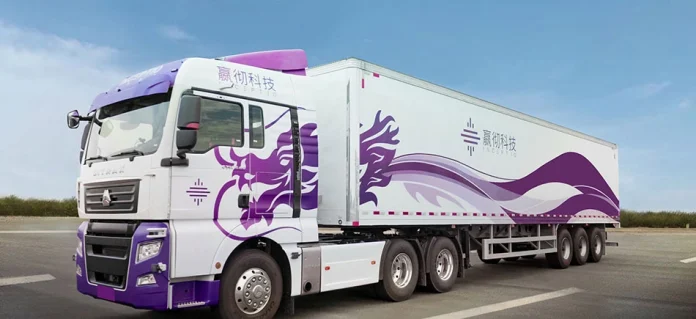
The artificial intelligence industry has been captivated by the rapid evolution of large language models (LLMs) and generative AI, with breakthroughs in reasoning, coding, and multimodal understanding occurring at a breakneck pace. However, for the executives leading China’s autonomous trucking sector, these software leaps are not translating into a faster timeline for putting driverless freight vehicles on public roads. According to a recent report by CNBC, the CEOs of Inceptio Technology and Pony.ai are tempering expectations, emphasizing that the physical realities of operating 40-ton trucks at highway speeds present challenges that cannot be solved by better algorithms alone.
This sobering assessment comes directly from the CEOs of China’s two leading autonomous trucking companies. Inceptio Technology CEO Julian Ma told CNBC that his company is sticking to its mid-2028 commercialization milestone, unaffected by broader advances in generative AI. Pony.ai CEO James Peng was even more blunt: “The world’s best linguistics expert doesn’t mean he’s a good driver. AI is a very broad term. They’re completely different things. Absolutely zero relevance.” Both executives argue that the bottleneck for commercialization has shifted from software intelligence to real-world data accumulation, hardware reliability, regulatory frameworks, and the sheer physics of heavy-duty transportation.
The Limits of Generative AI in the Physical World
The core argument presented by these executives is that the success of generative AI in digital domains (such as writing code or generating images) does not seamlessly translate to the physical world of autonomous driving. An LLM can hallucinate a fact or write a buggy line of code with relatively low stakes; a self-driving truck cannot afford a single “hallucination” when navigating a crowded highway at 100 kilometers per hour. The margin for error is effectively zero.
While new AI models are better at predicting other drivers’ behavior and handling complex edge cases, they do not address the fundamental physical constraints of a fully loaded semi-truck. These vehicles require significantly longer stopping distances, have massive blind spots, and handle differently depending on the weight and distribution of their cargo. Furthermore, the sensors that feed data to these advanced AI models, such as long-range LiDAR and high-resolution cameras, must withstand extreme weather conditions, constant vibration, and the rigors of long-haul operations. Ensuring this hardware reliability at scale remains a massive engineering challenge that software alone cannot overcome.
(Related: RoboSense Unveils Next-Gen Solid-State LiDAR as China Dominates Autonomous Driving Sensors)
The Hardware and Supply Chain Bottleneck
Another significant hurdle highlighted by industry leaders is the immaturity of the automotive supply chain for autonomous trucking components. Unlike passenger vehicles, which benefit from massive economies of scale and a highly developed tier-one supplier ecosystem, the heavy-duty truck market is more fragmented and slower to adopt new technologies.
To achieve true Level 4 autonomy (where no human driver is required under specific conditions), trucks must be equipped with redundant systems for steering, braking, and power supply. If the primary system fails, a backup must instantly take over to bring the vehicle to a safe stop. Developing and manufacturing these automotive-grade redundant systems for heavy-duty trucks is incredibly complex and expensive. Executives note that while the AI “brain” of the truck is advancing rapidly, the physical “nervous system” and “muscles” required to execute its commands safely are still lagging behind.
Regulatory and Operational Realities
Beyond the technical challenges, the commercial rollout of self-driving trucks is heavily constrained by regulatory and operational realities. While China has been proactive in establishing testing zones and issuing permits for autonomous passenger vehicles (robotaxis), the regulations governing heavy-duty freight are understandably more stringent. The potential consequences of an accident involving a driverless semi-truck are catastrophic, leading regulators to adopt a highly cautious approach.
Currently, most commercial deployments of autonomous trucks in China operate under a “hub-to-hub” model, where human drivers navigate the complex urban environments at the beginning and end of a journey, and the autonomous system takes over for the long highway stretch in between. Even in these controlled scenarios, a safety driver is typically required to be present in the cab. Transitioning to fully driverless operations on public highways will require not only technological perfection but also a comprehensive legal framework that addresses liability, insurance, and infrastructure requirements.
A Pragmatic Path Forward
The consensus among China’s autonomous trucking leaders is that the path to commercialization will be incremental and pragmatic, rather than revolutionary. Instead of waiting for a single AI breakthrough to unlock full autonomy, companies are focusing on deploying their technology in constrained environments, such as ports, mines, and dedicated logistics parks, where the variables are easier to control.
Furthermore, many firms are adopting a “driver-in-the-loop” approach, using their advanced AI systems to assist human drivers rather than replace them entirely. This strategy, often referred to as Level 2+ or Level 3 autonomy, can improve safety, reduce driver fatigue, and increase fuel efficiency, providing immediate commercial value while the technology and regulations for full autonomy continue to mature. While the dream of fleets of driverless trucks crisscrossing China remains the ultimate goal, the industry is acknowledging that the journey will be a marathon, not a sprint, regardless of how smart the AI becomes.
(Related: WeRide and Lenovo Target 200,000 Autonomous Vehicles by 2031 with HPC 3.0 Platform)