
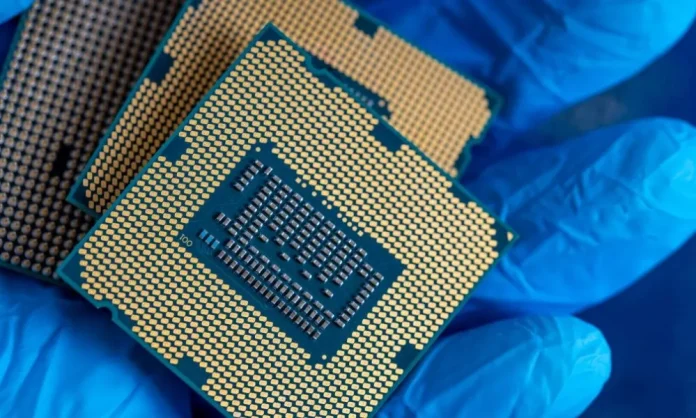
China’s aggressive push to build out its artificial intelligence infrastructure is having a profound impact on its broader macroeconomic trajectory, forcing economists to rapidly revise their forecasts for the year. Driven by a massive surge in imports of critical technologies, particularly advanced semiconductors, China’s trade dynamics are shifting in ways that underscore the country’s determination to secure its position in the global AI race, even amid tightening international export controls and geopolitical volatility.
According to a recent poll of 17 economists conducted by Bloomberg in April, China’s imports are now projected to jump to a five-year high of 5% in 2026. This represents a dramatic upward revision, more than doubling the gain that was predicted just a month prior. Export forecasts have also been revised upward, from 3.6% to 4.9%. Despite this robust trade activity, China is on track to run a goods surplus of just over US$1.2 trillion, barely exceeding its 2025 level, as the surge in high-value imports offsets export gains.
The Semiconductor Import Boom
The primary driver of this import surge is the insatiable demand for the hardware necessary to train and deploy advanced AI models. In the first quarter of 2026, China’s total imports soared by 23% compared to the same period a year ago. The composition of these imports is particularly revealing. Estimates from Pantheon Macroeconomics indicate that the value of integrated circuits imported by China skyrocketed by 54% year on year in March, accounting for nearly a third of the country’s total import growth.
Crucially, while the value of these semiconductor imports surged by 54%, the actual volume of chips imported rose by only 14%. This significant disparity highlights that China is importing increasingly expensive, high-end chips, the exact type of advanced processors required for AI workloads. This trend aligns with broader industry forecasts predicting that global AI spending will reach a staggering US$2.5 trillion in 2026. While China has emerged as the world’s largest supplier of AI-related goods, it remains a net importer of the critical foundational technologies, especially the most advanced semiconductors.
The primary beneficiaries of this Chinese import boom are its regional neighbors. Taiwan and South Korea, both powerhouses in semiconductor manufacturing, are the primary sources for China’s AI-related imports. Both economies have reported surging exports to China, underscoring the deeply interconnected nature of the Asian technology supply chain, even as political tensions simmer.
(Related: China Reroutes Chip Tool Imports Through Southeast Asia as US Controls Tighten)
Economic Resilience and Strategic Shifts
The surge in AI-related imports is occurring amid significant global economic and geopolitical instability. The ongoing conflict in Iran has triggered the worst energy disruption in generations, severely impacting global supply chains. However, China’s economy has demonstrated remarkable resilience in the face of these shocks. Erica Tay, an economist at Maybank Securities, noted that “China’s economy has proven more resilient to Iran war-related supply shocks than many Asian countries.”
This resilience is partly due to strategic shifts in China’s import profile. While the value of high-tech imports is soaring, Pantheon Macroeconomics expects oil and gas imports to fall sequentially by 14% and 18%, respectively, in April, largely due to disruptions in the Strait of Hormuz. Furthermore, the Chinese Yuan has strengthened by approximately 7% against the US dollar over the past year, increasing the purchasing power of Chinese firms acquiring foreign technology.
The shifting trade dynamics also reflect a broader strategic recalibration by Beijing. Serena Zhou, senior China economist at Mizuho Securities, who forecasts that imports will grow by an even more robust 7.5% in 2026, observed that “The government has realised the huge trade surpluses are not sustainable.” By accelerating imports of critical AI infrastructure, China is not only fueling its domestic technology sector but also seeking to rebalance its trade profile in line with its long-term strategic goals. The massive investment in AI hardware suggests that Beijing views technological self-sufficiency and AI leadership as paramount, willing to absorb the high costs of advanced imports to secure its future in the intelligent economy. This strategy is not without risks. The heavy reliance on imported semiconductors leaves China vulnerable to further tightening of US export controls, which could disrupt the flow of critical components at any moment. However, the current data indicate that Chinese firms are aggressively stockpiling these essential technologies while they still can, creating a buffer against future restrictions. This proactive approach is reshaping global trade flows and forcing economists to continually reassess the scale and speed of China’s AI ambitions. As the year progresses, the interplay between these massive import volumes and the broader macroeconomic environment will be a critical indicator of China’s success in navigating the complex geopolitical landscape of the AI era.
(Related: China Is Now the World’s Largest Exporter of AI-Related Goods, Accounting for 19% of Global Supply)