
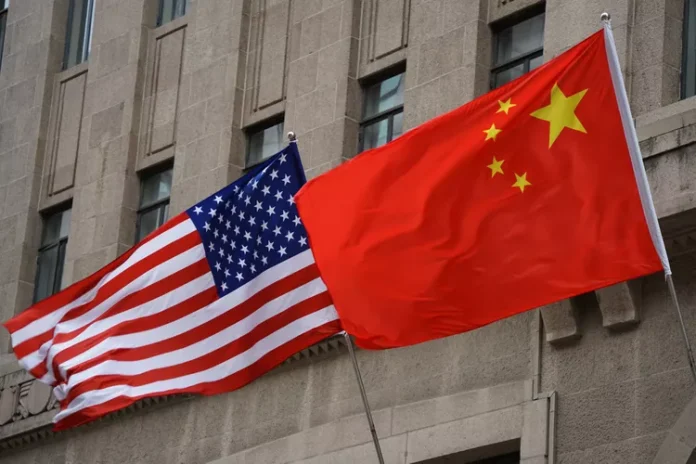
China has initiated a sweeping new policy to restrict top technology firms, including leading artificial intelligence startups, from accepting US capital without explicit government approval. According to a report by Reuters on April 24, 2026, Chinese regulators, led by the National Development and Reform Commission (NDRC), have instructed several private technology companies to reject US investment in upcoming funding rounds. This move marks a significant escalation in the ongoing technological decoupling between the world’s two largest economies and signals that Beijing is increasingly willing to sacrifice access to foreign capital in order to maintain control over its most strategically sensitive industries.
The new directives specifically target high-profile AI developers. Companies that reportedly received this guidance include Moonshot AI, the developer of the Kimi family of models; StepFun, a leading multimodal AI startup; and ByteDance, the parent company of TikTok. For ByteDance, the restrictions apply specifically to secondary share sales to US investors, which now require explicit government clearance before proceeding. The measures are designed to prevent US investors from gaining stakes in sensitive technologies that Beijing considers critical to its national security and future economic competitiveness.
The policy represents a significant departure from China’s previous approach to foreign investment, which generally welcomed US venture capital as a source of both funding and expertise. For years, Silicon Valley firms like Sequoia Capital and GGV Capital had deep ties to China’s tech ecosystem. The new restrictions signal that those ties are being deliberately severed, at least in the most strategically sensitive sectors.
(Related: Moonshot AI Crosses $100 Million ARR One Month After Launching Kimi K2.5)
The Catalyst: Meta’s Acquisition of Manus AI
The immediate catalyst for this regulatory crackdown appears to be Meta’s $2 billion acquisition of the Chinese AI startup Manus in 2025. That high-profile deal triggered intense scrutiny from Beijing and launched a series of investigations into foreign investments in Chinese companies and the export of advanced technology. The Chinese government was alarmed by the prospect of a US tech giant acquiring a domestic AI asset, and the Manus deal appears to have served as a wake-up call, prompting a broader review of foreign investment policies in the AI sector.
This defensive posture mirrors actions taken by Washington earlier in 2026, as Bloomberg also reported. The US government imposed its own stringent restrictions, limiting American investment in certain Chinese AI, semiconductor, and quantum computing firms. By implementing reciprocal controls, Beijing is signaling its intent to protect its domestic tech ecosystem from foreign influence and potential intellectual property transfer. The result is a progressive bifurcation of the global technology investment landscape, with capital flows increasingly restricted along geopolitical lines.
(Related: Manus AI Founders Barred from Leaving China Amid Meta Deal Scrutiny)
Implications for China’s AI Funding Ecosystem
The NDRC’s new rules will profoundly impact the funding landscape for Chinese AI startups. Historically, US venture capital has played a crucial role in fueling China’s technology sector, providing not only capital but also access to global networks, expertise, and market intelligence. By cutting off this vital source of funding, Chinese startups will be forced to rely more heavily on domestic alternatives, including state-backed investment funds, local tech giants like Tencent and Alibaba, and the growing pool of domestic venture capital.
This shift could create both challenges and opportunities. On the one hand, some startups may find it harder to raise the large rounds needed to compete at the frontier of AI development. On the other hand, the policy could accelerate the maturation of China’s domestic venture capital market and strengthen the ties between AI startups and the state, potentially providing more stable, long-term funding for strategic projects. China’s venture capital market logged $1.3 billion in AI investments in just 48 hours earlier this year, suggesting that domestic appetite for AI investment remains strong.
As the US-China tech war intensifies, the flow of capital across the Pacific is becoming increasingly restricted, reshaping the global innovation landscape. For investors and founders on both sides, the message is clear: the era of frictionless cross-border technology investment is drawing to a close.
The long-term implications of this policy shift extend beyond the immediate funding landscape. By restricting US investment in its most promising AI companies, China is also limiting the soft power and influence that US investors have traditionally exercised over the governance and strategic direction of the companies they back. US venture capitalists have historically played a role in encouraging Chinese tech companies to adopt international standards, build global teams, and pursue overseas listings. As those ties are severed, the governance and strategic orientation of China’s AI champions will become increasingly shaped by domestic priorities and state guidance, deepening the divergence between Chinese and Western AI ecosystems.
For the companies directly affected, the practical impact will depend heavily on how the approval process is administered. If the NDRC’s review is swift and predictable, some US investment may still flow into Chinese AI companies with government clearance. But if the process is slow, opaque, or used to selectively block deals, it could effectively shut US investors out of the most promising opportunities. The uncertainty itself is likely to deter many US investors from pursuing Chinese AI deals, even in cases where approval might be granted in theory. In that sense, the policy may achieve its intended effect, reducing US influence in China’s AI ecosystem, without ever having to formally reject a single investment application.