
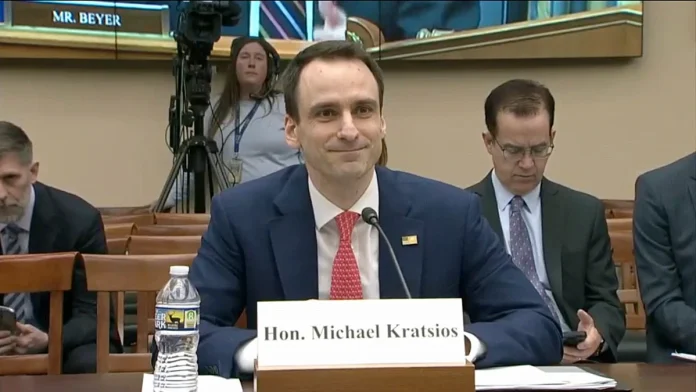
It appears the White House has officially accused foreign entities, principally based in China, of running “industrial-scale campaigns” to steal advanced artificial intelligence technology from American firms. In an internal memo obtained by the BBC, Michael Kratsios, the Director of Science and Technology Policy, outlined a coordinated effort by Chinese actors to extract proprietary information from US AI models through a process known as “distilling.” The memo marks a significant escalation in Washington’s rhetoric, framing the technical practice of model distillation not just as a competitive nuisance but as a national security threat.
Distillation involves using a larger, more capable AI model to train a smaller, cheaper one. According to the memo, foreign firms are operating thousands of individual accounts to appear as normal users, then coordinating attempts to “jailbreak” or expose the underlying logic and training data of US models. This extracted data is then applied to build and train their own AI systems. Kratsios stated that the aim of these campaigns is to “systematically undermine American research and development and access proprietary information.”
(Related: US Lawmakers Target DUV Lithography, Moving to Close the Last Major Chip Export Loophole to China)
The US Government’s Four-Point Response
In response to what it terms “malicious exploitation,” the White House announced four immediate actions. First, the administration will share more intelligence with US AI companies regarding the specific tactics employed and the actors involved in these distillation campaigns. Second, the government will work to “better coordinate” with private companies to actively fight these attacks. Third, the White House plans to develop a set of “best practices to identify, mitigate, and remediate” distillation efforts. Finally, the administration will “explore” mechanisms to hold foreign actors accountable for the theft of US AI technology.
The memo notably did not name specific Chinese companies, nor did it detail concrete punitive actions such as new sanctions or entity list additions. A White House spokesperson declined to comment beyond the contents of the memo. However, the announcement aligns with recent industry complaints. Earlier this year, US AI lab Anthropic publicly accused three Chinese companies—DeepSeek, Moonshot, and MiniMax—of running distillation campaigns against its models. OpenAI has leveled similar accusations against DeepSeek.
(Related: OpenAI, Anthropic, and Google Unite to Combat Chinese AI Model Copying)
Beijing Rejects the Accusations
The Chinese government swiftly rejected the White House’s claims. A representative of China’s US embassy in Washington DC criticized the memo, calling it part of “the unjustified suppression of Chinese companies by the US.” The representative asserted that China’s technological advancement is “the result of its own dedication and effort as well as international cooperation that delivers mutual benefits,” adding that China is “becoming the world’s innovation lab.”
The diplomatic clash over AI distillation comes at a sensitive time, with US President Donald Trump expected to visit China in May. As the technical methods for detecting distillation become more sophisticated, the White House is sending a clear warning. “Foreign entities who build their AI capabilities on such fragile foundations should have little confidence in the integrity and reliability of the models they produce,” Kratsios wrote. The question now is whether the US government will move from issuing memos to imposing concrete penalties on the companies involved.