
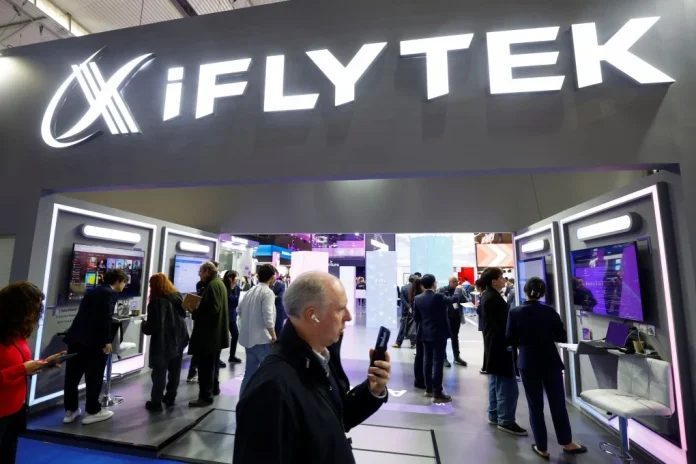
Brazil announced approximately 2.3 billion reais, or about 444.2 million dollars, in investments on August 20, 2026 to bolster its artificial intelligence ecosystem, according to a Reuters report. Of that total, 1.3 billion reais will fund a supercomputing infrastructure project in Rio de Janeiro in partnership with China’s Huawei Technologies and iFlytek, with the facility to be used primarily for developing large language models. Cooperation on the Rio effort is scheduled to begin in July 2027, Reuters reported.
About 1 billion reais will be allocated through a tender for a supercomputer in the northeastern state of Rio Grande do Norte that is expected to rank among the world’s 10 most powerful AI processing machines, Reuters reported. Government officials and Science and Technology Minister Luciana Santos anticipate U.S. chipmaker Nvidia to win the Rio Grande do Norte tender, with the machine expected to begin operating by the end of next year. Those expectations for Nvidia are based on anonymous officials and the minister’s statements. The investments are funded by Brazil’s National Fund for Scientific and Technological Development, known as FNDCT, through phased disbursements.
A Split Bet on Chinese Partners and U.S. Chips
The plan divides Brazil’s new AI buildout between two tracks. In Rio de Janeiro, the government is moving forward with Chinese partners Huawei and iFlytek to establish supercomputing infrastructure designed chiefly for large language model work. In Rio Grande do Norte, the government is running a competitive tender for a separate AI supercomputer that is expected to place among the global top 10 in AI processing power. Taken together, the structure of the program involves Chinese partners on the Rio project and an anticipated U.S. supplier for the northeastern build, pending the tender’s result.
The Rio de Janeiro infrastructure is described as an environment that will be used primarily to develop large language models. That focus places the Rio site at the center of Brazil’s stated goal to strengthen its AI ecosystem. Cooperation for the Rio project is scheduled to start in July 2027, establishing a clear milestone for the partnership with Huawei and iFlytek. The roles, budget, location, and timing have been set out as part of the government’s August 20 announcement, with the infrastructure intended to underpin domestic work in training and refining advanced AI systems that rely on large-scale computing.
Huawei’s role in the Rio initiative comes as the company has been active in AI tooling. EastFrontier has covered Huawei’s AscendNPU compiler initiative, which opened the AscendNPU IR for China’s AI compiler ecosystem, an effort that underscores the company’s broader push in AI software and hardware integration. Brazil’s plan to partner with Huawei and iFlytek on large language model infrastructure lands against that backdrop, while remaining defined by the government’s timeline and budget for the Rio installation. The cooperation start date in July 2027 sets the project’s next formal waypoint.
Timelines, Tender Mechanics, and Performance Targets
The government has laid out distinct time frames for each piece of the buildout. In Rio de Janeiro, cooperation with Huawei and iFlytek is scheduled to start in July 2027, anchoring the calendar for the infrastructure intended for large language models. In Rio Grande do Norte, the tender-backed supercomputer is expected to begin operating by the end of next year. The two timelines reflect different procurement approaches and project scopes, with the northeastern machine targeted for operation by the end of next year and the Rio cooperation scheduled to start in July 2027.
The northeastern supercomputer will be procured through a tender that totals about 1 billion reais. Officials and the science and technology minister anticipate Nvidia to secure that award, with the outcome still subject to the tender process. The expectation for a U.S. chipmaker to supply the Rio Grande do Norte machine is based on anonymous government officials and the minister’s public statements. The government has also indicated that the machine is expected to rank among the world’s 10 most powerful AI processing systems. Specific technical performance metrics for the supercomputers other than that top 10 ranking remain subject to the final tender results.
Funding for both efforts will come from the National Fund for Scientific and Technological Development through phased disbursements. That funding structure applies across the 2.3 billion reais program, including the 1.3 billion reais allocated for the Rio de Janeiro infrastructure with Huawei and iFlytek and the approximately 1 billion reais assigned to the Rio Grande do Norte tender. The government has described the program as an investment to bolster the country’s AI ecosystem, with each project keyed to a stated purpose and schedule.
Implications for Brazil’s AI Ecosystem
The government’s initiative specifies a linked pair of supercomputing builds, each with a defined budget, partner structure, and timeline, to bolster Brazil’s AI ecosystem. In Rio de Janeiro, the 1.3 billion reais allocation supports a supercomputing infrastructure developed with Huawei and iFlytek, and that installation is intended primarily for large language model development. Cooperation on that project is scheduled to commence in July 2027. In Rio Grande do Norte, the government is directing roughly 1 billion reais to a tender process for a system that is expected to rank among the top 10 AI processing machines worldwide.
Officials and Science and Technology Minister Luciana Santos have said they anticipate Nvidia to win the northeastern tender, although that expectation is based on anonymous government sources and the minister’s statements rather than on a concluded procurement. The supercomputer in Rio Grande do Norte is expected to begin operating by the end of next year. For both projects, the government has indicated that the investments are funded by FNDCT and will be disbursed in phases. Beyond the expectation of a top 10 ranking for the northeastern machine, specific technical performance details remain subject to the final tender outcome.
The combined 2.3 billion reais program, announced August 20, 2026, outlines a two-site approach. It pairs a Chinese-partnered infrastructure in Rio de Janeiro aimed at large language models with a tendered installation in Rio Grande do Norte that government officials and the science and technology minister expect to source U.S. chips. The plan sets near-term and medium-term milestones for both tracks, including the northeastern machine’s target to be operational by the end of next year and the July 2027 cooperation start for the Rio de Janeiro project. The funding approach via phased FNDCT disbursements applies across the program and underpins the timeline laid out by the government.