
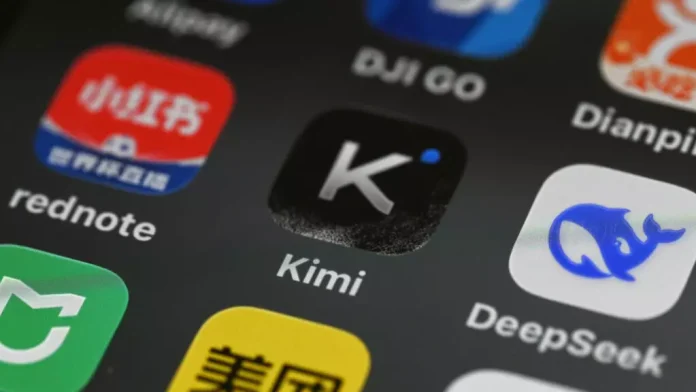
The Trump administration has leveled serious allegations against Moonshot AI, accusing the Chinese startup of using sophisticated distillation techniques to undermine American models in developing its recently released Kimi K3. The accusations, which mark a significant escalation in the ongoing technology dispute between Washington and Beijing, have prompted immediate threats of sanctions from the U.S. Treasury Department.
Michael Kratsios, Director of the White House Office of Science and Technology Policy (OSTP), stated on Wednesday that the administration possesses information indicating Moonshot distilled Anthropic’s Fable model. According to Kratsios, the Chinese firm built a sophisticated internal system specifically designed to harvest outputs from American models at industrial scale, with technical measures in place to rotate access points and avoid triggering detection systems. Furthermore, Kratsios alleged that Moonshot acquired servers equipped with Nvidia GB300 chips, hardware that is explicitly banned from sale to Chinese entities, likely through third-party channels in Southeast Asia, including Thailand.
The allegations strike at the heart of the ongoing debate over open-source and open-weight AI models. Model distillation, a process where a smaller or newer model is trained using the outputs of a larger, more capable model, has become a contentious issue in the AI industry. While some view it as a legitimate research technique, others, particularly frontier labs like Anthropic and OpenAI, consider it a form of intellectual property theft when used to replicate their proprietary capabilities.
Treasury Threatens Sanctions Over IP Theft
The allegations have drawn a sharp response from the Treasury Department. Secretary Scott Bessent took to social media platform X to issue a stern warning, declaring that “open source is not open season on American IP.” Bessent emphasized that when foreign firms engage in covert, industrial-scale distillation that crosses the line into intellectual property theft, the United States will consider imposing sanctions and adding the offending companies to the Entity List.
During an appearance on Fox Business, Bessent reiterated these concerns, noting that U.S. officials are discovering watermarks from American large language models embedded within various Chinese models. He characterized this practice as unacceptable and affirmed that the U.S. possesses the authority to sanction companies involved in such activities. Despite these strong statements, the Commerce Department had not yet drafted formal plans to add Chinese AI companies to the Entity List as of Wednesday.
The threat of sanctions represents a significant escalation in the U.S. government’s approach to Chinese AI development. Previously, the focus had largely been on restricting access to advanced hardware, such as Nvidia’s cutting-edge GPUs. However, the new allegations suggest a shift toward targeting the software and data practices of Chinese AI firms, potentially opening a new front in the technological rivalry between the two nations.
Industry Experts Debate Distillation Claims
The White House’s claims have sparked debate among artificial intelligence experts regarding the feasibility of the alleged timeline. Anthropic’s Fable model was publicly available only on July 1, raising questions about whether Moonshot could have relied primarily on distillation from this model to develop Kimi K3 in such a short period. However, Anthropic had previously accused three Chinese companies, including Moonshot, of conducting millions of distillation interactions using fake accounts earlier in the year, suggesting a longer history of such practices.
The controversy has reignited discussions about the security of open-weight models. Dean Ball, former White House AI adviser and current Head of Strategic Futures at OpenAI, argued that the U.S. should implement restrictions or outright bans on Chinese open-weight models to protect American intellectual property. Moonshot has not yet issued a public response to the allegations from the White House or the Treasury Department.
The debate over distillation is further complicated by the rapid pace of AI development in China. Companies like Moonshot, DeepSeek, and Zhipu AI have made significant strides in recent months, releasing models that rival or even surpass the capabilities of leading American systems in certain benchmarks. This rapid progress has fueled suspicions among U.S. officials and industry leaders that Chinese firms are relying heavily on American intellectual property to accelerate their development.
The Broader Geopolitical Context
The allegations against Moonshot must be viewed within the broader geopolitical context of the U.S.-China technology war. The Trump administration has made maintaining American leadership in artificial intelligence a top national security priority, viewing the technology as critical to future economic and military dominance.
In this context, the accusations of distillation are not merely a dispute over intellectual property; they are part of a larger narrative framing China’s AI development as a threat to U.S. national security. The potential imposition of sanctions or Entity List designations against Moonshot and other Chinese AI firms would represent a significant escalation of this conflict, potentially leading to retaliatory measures from Beijing and further bifurcating the global technology ecosystem.
As the situation continues to unfold, the AI industry will be watching closely to see how the U.S. government proceeds. The outcome of this dispute could have far-reaching implications for the future of open-source AI, international collaboration in technology research, and the broader trajectory of the U.S.-China relationship.